
Views: 0 Author: Site Editor Publish Time: 2026-08-03 Origin: Site


Modern car buyers stand at a difficult crossroads today. We face rising fuel costs from traditional internal combustion engine (ICE) vehicles on a daily basis. Meanwhile, fully electric vehicles (EVs) still suffer from glaring public infrastructure limitations. These two extremes force drivers into a frustrating compromise. You must choose between expensive weekly gas station visits and anxiety-inducing charging queues.
To effectively bridge this gap, the Oil-electric hybrid has emerged as the most reliable transitional technology. It blends the convenience of liquid fuel and the efficiency of modern electric propulsion. This architecture resolves immediate mobility challenges without demanding massive lifestyle changes.
This article provides an objective, evidence-based evaluation of these dual-powertrain systems. You will discover their mechanical realities, immediate financial benefits, and daily operational trade-offs. We aim to equip you with clear facts and practical frameworks to inform your next vehicle purchase. Let us explore how this technology actually performs in the real world.
Modern drivers demand a highly versatile mobility solution. We want affordable daily commutes to the office. We also need stress-free reliability for long weekend road trips. Furthermore, global cities increasingly implement strict low-emission zones. Traditional gas cars struggle against these new environmental regulations. They burn expensive fuel continuously in heavy traffic. They waste massive amounts of kinetic energy during urban braking phases.
Conversely, the electric vehicle infrastructure gap remains an undeniable reality. Pure electric cars promise zero tailpipe emissions. However, consumer skepticism remains highly valid today. Public charging stations often suffer from poor maintenance. Broken screens and software glitches frequently plague the charging network. Charging speeds vary wildly based on local grid capacity. Waiting hours at a crowded station ruins family vacations. Grid reliability during extreme summer heatwaves or winter storms creates genuine range anxiety.
This dynamic introduces the true value proposition of the hybrid architecture. It creates a seamless, stress-free bridge between two eras of transportation. The vehicle utilizes a localized dual-powertrain system. An onboard computer manages energy sources automatically. The gas engine generates primary power and extends your driving range. The electric motor handles low-speed efficiency and instant acceleration. This elegant design self-mitigates the primary risks of both pure ICE platforms and pure EV architectures. You gain environmental compliance without sacrificing operational freedom.
Buyers must understand the architectural differences before visiting a dealership. The automotive industry divides these vehicles into two primary categories. Each category demands a different level of user engagement.
An HEV operates as a completely closed-loop energy system. The internal combustion engine generates primary forward propulsion. Regenerative braking captures kinetic energy during deceleration phases. The electric motor reverses its polarity to act as a generator. This process pushes electrical energy directly back into a small, high-voltage battery. The battery typically holds around 1 to 2 kilowatt-hours (kWh) of capacity.
The adoption reality here is incredibly appealing. You experience zero behavioral changes. You fuel the vehicle at regular gas stations. You drive it exactly like a traditional car. The automated electrical assistance operates entirely in the background. It provides instant torque when you accelerate from a stoplight. It seamlessly shuts the gas engine off during idle moments.
A PHEV utilizes a fundamentally different engineering approach. It features a significantly larger battery capacity, often ranging from 10 to 20 kWh. This larger pack allows the vehicle to achieve 20 to 40 miles of pure electric driving. The gas engine primarily acts as a backup generator for much longer trips.
However, successful adoption requires major lifestyle adjustments. You really need to install a Level 2 home wallbox. You must develop active daily charging habits. If you skip plugging the car in, operational efficiency plummets. The gas engine must drag hundreds of pounds of dead battery cells around. This completely negates the premium price tag you paid at the dealership.
| System Feature | Standard HEV | Plug-in PHEV |
|---|---|---|
| Battery Capacity | 1.0 - 2.5 kWh | 10.0 - 20.0 kWh |
| Charging Method | Engine & Braking | Wall Outlet & Braking |
| Pure Electric Range | 1 - 2 miles (low speed) | 20 - 40 miles (highway capable) |
| Daily Habit Changes | None required | Daily plug-in routine needed |
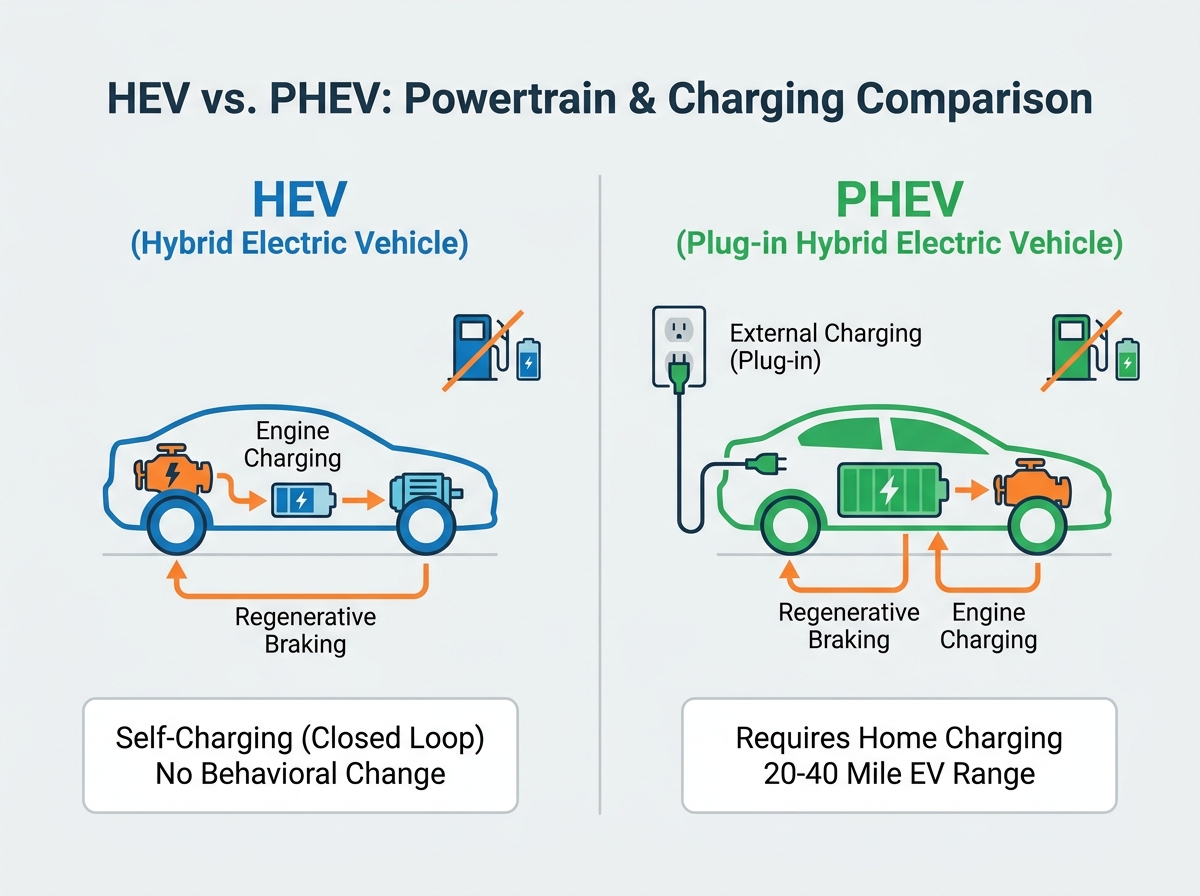
Understanding the immediate financial returns helps justify the initial purchase. We must evaluate these vehicles beyond just their sticker prices.
You will see a quantifiable reduction in urban fuel consumption. Stop-and-go traffic destroys the gas mileage of traditional cars. Hybrids solve this beautifully. The electric motor handles the most fuel-heavy acceleration phases. The gas engine stays dormant during heavy traffic jams. According to standard EPA testing cycles, these vehicles often boost city fuel economy by 30 percent or more.
You also benefit from decreased wear on traditional mechanical components. Regenerative braking systems handle most of your daily deceleration. They slow the car using electrical resistance rather than physical friction. Traditional brake pads see minimal use during daily commutes. Standard car brakes require replacement every 30,000 miles. Hybrid brake pads often last well past 70,000 miles.
The secondary market shows massive demand for these vehicles. Cautious buyers want reliable stepping stones toward full electrification. Fully electric vehicles often face steep depreciation curves. Battery technology evolves too rapidly, making older EVs obsolete. In contrast, dual-powertrain systems offer a stable financial middle ground. Market liquidity stays high. Dealerships actively seek them out as trade-ins. A high-quality Oil-electric hybrid generally retains its value significantly better over a five-year period than a pure gas equivalent.
Operational freedom matters immensely for busy families. You enjoy total immunity to charging station queues. Broken public infrastructure will never delay your journey. You leverage the existing global refueling network. Cross-country road trips remain effortless and predictable. You simply pull into a gas station, fill the tank in three minutes, and return to the highway. This level of autonomy provides unmatched peace of mind.
Every automotive technology carries specific compromises. We must examine the objective drawbacks before making a final decision. Blindly purchasing new technology often leads to financial regret.
You will pay a higher initial MSRP compared to equivalent ICE models. Manufacturers spend thousands of dollars on complex battery packs and electric motors. Dealerships pass these engineering costs directly to the consumer. Buyers face a specific breakeven timeline. We must calculate this based on your average yearly mileage. If you drive less than 5,000 miles a year, the fuel savings may never offset the initial purchase premium. It often takes three to five years of heavy driving to recoup the extra upfront capital.
Maintaining a dual system carries inherent mechanical risks. You must maintain a high-voltage electrical architecture. You must also maintain a traditional combustion engine. You essentially double the potential failure points under the hood. Routine maintenance costs remain similar to standard cars. However, long-term repair costs outside the warranty period can run high. High-voltage inverters, DC-DC converters, and specialized battery cooling systems require highly trained mechanics. When these bespoke components fail, repair bills escalate rapidly.
Climate severely impacts real-world battery performance. Sub-zero temperatures reduce electrical efficiency significantly. Lithium-ion chemistry struggles to hold a charge in extreme cold. Winter weather can slash your electric range by up to 30 percent. The combustion engine must run more frequently just to generate cabin heat.
Furthermore, battery capacity fading remains chemically inevitable. Cells degrade steadily over a decade of continuous charging cycles. You will likely see noticeable range drops around the 10-to-15-year mark. Industry standards require manufacturers to warranty batteries for eight years or 100,000 miles. Once that warranty expires, eventual battery replacement costs remain a looming financial liability. A full battery pack replacement easily costs several thousand dollars.
We need a logical framework to determine if this technology fits your lifestyle. Emotion should never drive an automotive purchase. Let us break down the critical evaluation criteria.
Evaluate your home charging feasibility carefully before considering a PHEV. Do you have access to a private garage or driveway? Can you hire an electrician to install a dedicated 240-volt circuit? You also need to check your local utility rates. Access to off-peak energy tariffs makes overnight charging incredibly cheap. Conversely, street parking limitations often ruin the PHEV experience. Dragging an extension cord across a public sidewalk creates safety hazards and immense frustration.
Follow a strict mathematical logic when shortlisting vehicles. Calculate your projected fuel savings over a realistic five-year period. Compare this directly against the initial MSRP premium. We highly recommend scheduling extended test drives.
During the test drive, pay close attention to the regenerative braking feel. Some systems feel overly aggressive or jerky. Notice the powertrain transition smoothness. You should barely feel the gas engine turn on and off. A seamless transition indicates superior engineering. Evaluate cabin noise when the gas engine engages under heavy acceleration.
| Daily Driving Profile | Home Charging Access? | Recommended Powertrain |
|---|---|---|
| Under 30 miles (City) | Yes | PHEV (Maximum savings) |
| Mixed Highway/City | No | HEV (Zero hassle) |
| 100+ miles (Highway) | No | Modern ICE or Diesel |
An oil-electric hybrid is not a universal silver bullet for every driver. Instead, it serves as a highly effective, pragmatic solution for a specific demographic. It bridges the gap perfectly without demanding massive lifestyle overhauls. You gain modern efficiency while retaining traditional refueling autonomy.
Your daily driving habits ultimately dictate the true financial return. Short city commutes maximize your electric advantages. Conversely, harsh cold climates and sustained highway miles reduce your overall efficiency gains. You must weigh the upfront capital premium against realistic, long-term fuel savings.
Before booking a dealership consultation, take actionable steps today. Track your exact weekly mileage for one month. Evaluate your home electrical panel for charging capabilities. Research off-peak electricity rates in your specific zip code. Armed with this data, you can confidently schedule test drives and select the perfect powertrain for your future journeys.
A: Standard HEVs never require a plug. They generate all necessary electricity internally using the gas engine and regenerative braking. You drive them exactly like a regular gas car. Only PHEVs require external charging to utilize their full electric range, though they will still function on gas if the battery depletes.
A: Modern battery packs are engineered to last the typical lifespan of the vehicle. Most drivers experience reliable performance for 10 to 15 years. Federal regulations require manufacturers to provide an 8-year or 100,000-mile warranty on battery components, offering significant long-term peace of mind.
A: Standard HEVs generally do not qualify for federal tax credits anymore. However, many PHEVs still qualify for partial government incentives due to their larger battery sizes and plug-in capabilities. Always check current local and federal regulations, as incentive programs change annually.
A: Yes, extreme cold affects performance. Lithium-ion batteries lose efficiency in sub-zero temperatures, which can temporarily reduce electric range by up to 30 percent. Additionally, the gas engine will run more frequently during winter months simply to generate enough heat for the passenger cabin.
A: The basic maintenance schedule remains nearly identical. You still need regular oil changes, tire rotations, and fluid checks. However, hybrid brake pads often last much longer due to regenerative braking. The electrical components are largely maintenance-free but require specialized diagnostics if a warning light appears.


