
Views: 0 Author: Site Editor Publish Time: 2025-12-09 Origin: Site


You can pick from four main types of electric vehicles in 2025: BEVs, PHEVs, HEVs, and FCEVs. Each type of electric vehicle gives you something special. For example, you may want a car with zero emissions. Or you may want a car that can use both electric and gasoline. The table below shows how these EV vehicles are different in power source, emissions, and how you charge or refuel them:
Vehicle Type |
Power Source |
Emissions |
Charging Method |
Key Features |
|---|---|---|---|---|
BEV |
Electric |
Zero |
Plug-in |
Good for city driving, uses regenerative braking |
PHEV |
Electric + Gasoline |
Reduced |
Plug-in + Gasoline |
Can use both fuels, has a moderate electric range |
HEV |
Electric + Gasoline |
Reduced |
Regenerative braking |
Saves fuel, does not need to be plugged in |
FCEV |
Hydrogen |
Low |
Hydrogen refueling |
Makes electricity while you drive |
In 2025, there are four main types of electric vehicles. These are BEVs, PHEVs, HEVs, and FCEVs. Each type has special features and benefits.
Battery Electric Vehicles (BEVs) use only electricity to run. They make no emissions and are good for city driving. BEVs are quiet and need less maintenance.
Plug-in Hybrid Electric Vehicles (PHEVs) use electricity and gasoline. They work well for short trips on electric power. For longer trips, they use gas.
Hybrid Electric Vehicles (HEVs) have a gasoline engine and an electric motor. You do not need to plug them in. They save fuel by using regenerative braking.
Fuel Cell Electric Vehicles (FCEVs) use hydrogen to make electricity. They refuel quickly and can go long distances. FCEVs need hydrogen stations to work.
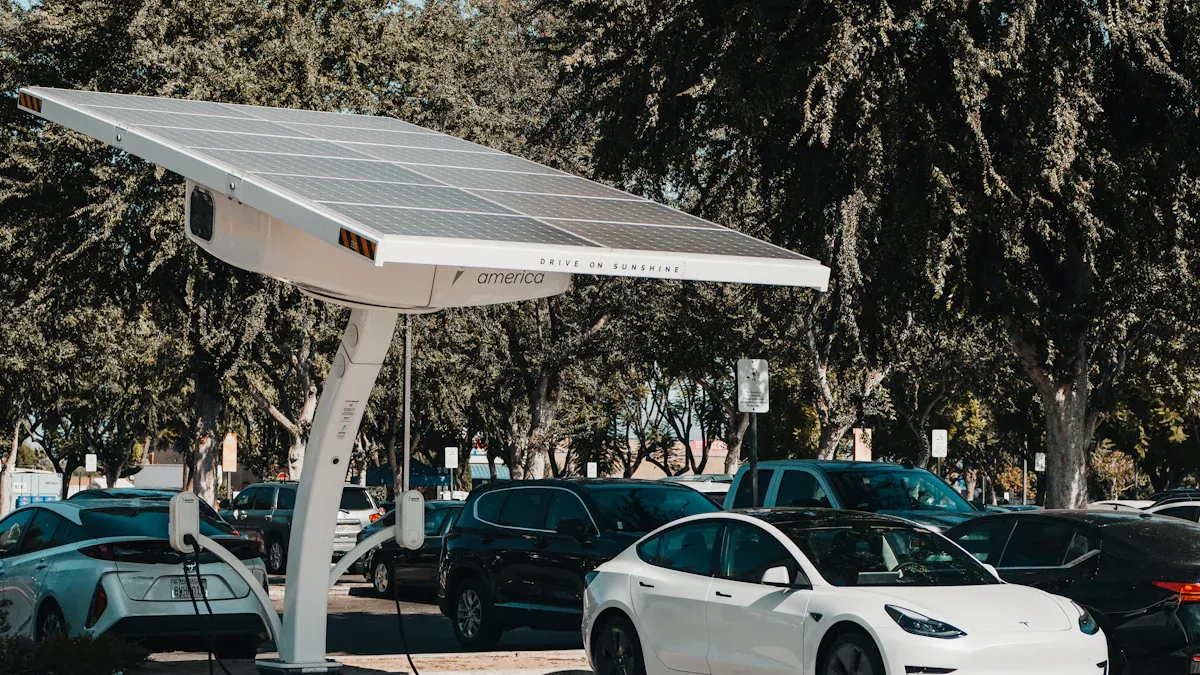
A battery electric vehicle, or BEV, is a kind of electric vehicle. It uses only a battery to make the car move. The battery gives power to electric motors. The car does not use any gasoline. It only runs on electricity from its battery.
You will not see a gasoline engine in a BEV. The car moves with power from its battery. BEVs help keep the air cleaner. They do not make tailpipe pollution.
Battery electric vehicles are known for being clean and simple. You charge them by plugging them in at home or at a public station. You do not need to buy gas for these cars. Here are some facts about BEVs in 2025:
In 2025, China had 57% of all BEV registrations. Enlarged Europe had 22%, and the U.S. had 12%.
China mostly uses lithium iron phosphate batteries. These batteries can mean shorter driving ranges because they hold less energy.
The U.S. and Europe want longer driving ranges. They use batteries that work better.
Charging is faster now. More BEVs in the U.S. and Germany can charge in less than one hour. In China, it takes about 1.2 hours on average.
BEVs do not have a tailpipe. They do not let out harmful gases. Many BEVs use regenerative braking. This helps charge the battery when you slow down. BEVs are quiet and have fewer moving parts. This means they often need less fixing.
A battery electric vehicle may be good for you if you want to help the planet. BEVs are also great if you like new technology. More people are picking BEVs now. They want cars that are useful and dependable. These drivers want a good driving range and easy charging. If you can charge at home or work, a BEV can make your trips easy and clean. You may also like BEVs if you do not want to stop at gas stations and want to help the earth.
Plug-in hybrid electric vehicles use both electricity and gasoline. They have a battery and an electric motor. They also have a gasoline tank and a regular engine. You can charge the battery with a plug at home. When the battery is empty, the car uses gasoline. This helps you drive short trips on electricity. For longer trips, you use gasoline.
Plug-in hybrid electric vehicles use both gasoline and electricity.
They have a battery, an electric motor, a gasoline tank, and an engine.
You can use either gasoline or electricity to drive.
PHEVs let you drive on electricity for many trips. If you need to go far, the gasoline engine helps you. In 2025, some cars can go only a few miles on electricity. Others can go much farther before using gas.
Make + Model |
Estimated Range (miles) |
|---|---|
2025 Ferrari 296 GTB |
7 |
2025 Jeep Wrangler 4xe |
21 |
2025 Porsche Cayenne e-Hybrid |
22 |
2025 Bentley Bentayga |
23 |
2025 Audi Q5 55 TFSI e |
23 |
2025 BMW M5 |
25 |
2025 Jeep Grand Cherokee 4xe |
26 |
2025 Mazda CX-90 |
26 |
2025 Mazda CX-70 |
26 |
2025 Lincoln Corsair Grand Touring |
27 |
2025 BMW XM |
30 |
2025 Porsche Panamera 4 e-Hybrid |
30 |
2025 Chrysler Pacifica Plug-in Hybrid |
32 |
2025 Kia Sorento PHEV |
32 |
2025 Volvo XC90 Recharge |
32 |
2025 Hyundai Tucson PHEV |
32 |
2025 BMW 550e xDrive |
33 |
2025 Kia Niro PHEV |
33 |
2025 BMW 750e xDrive |
33 |
2025 Volvo XC60 Recharge |
35 |
2025 Ford Escape PHEV |
37 |
2025 Lexus NX450h+ |
37 |
2025 Mitsubishi Outlander PHEV |
38 |
2025 BMW X5 xDrive50e |
39 |
2024 Toyota RAV4 Prime |
42 |
2024 Toyota Prius Prime |
44 |
2025 Bentley Flying Spur Hybrid |
47 |
2025 Mercedes-Benz GLE 450e |
48 |
2025 Mercedes-Benz GLC 350e |
54 |
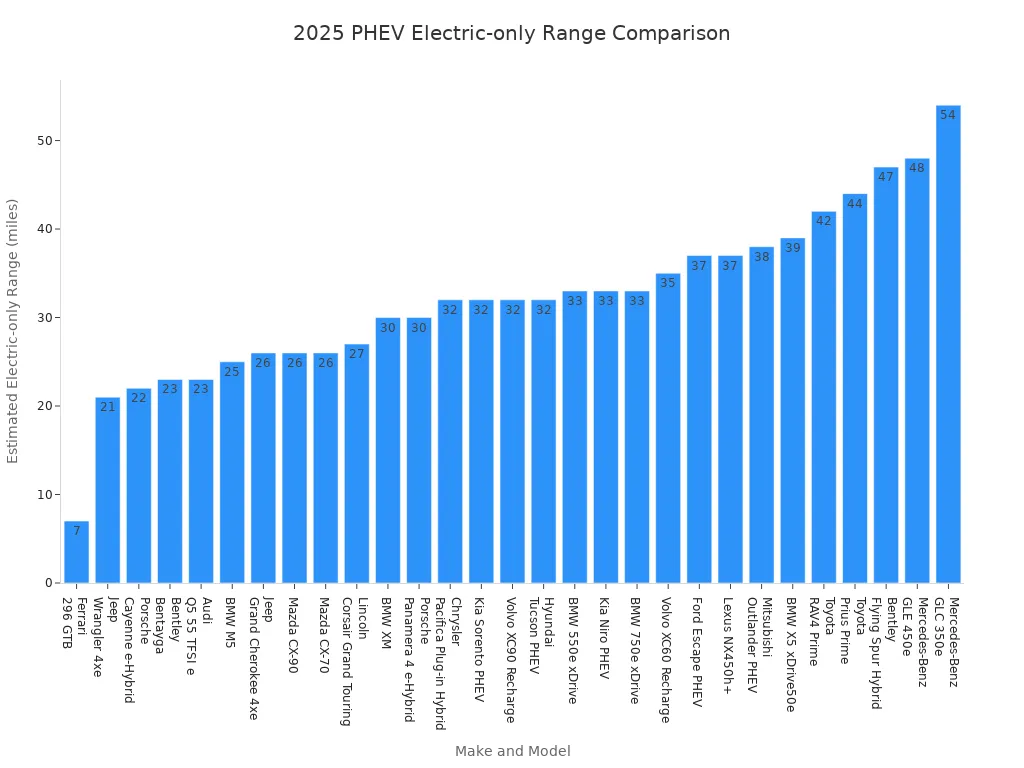
Some PHEVs can go over 50 miles on just electricity. If you charge your car often, you may not need gas for days.
A plug-in hybrid electric vehicle is good if you want choices. If you drive short trips, you can use electricity most days. For long trips, you can use gasoline. Many people use electric mode in the city. They use gasoline for vacations or long drives.
Some drivers use electric power for 86% of their trips.
In cities, drivers use electric mode for about half their driving.
If you want to save money on fuel and help the planet, a PHEV is a good pick. You get electric driving but can still go far without worry.
A hybrid electric vehicle uses a gasoline engine and an electric motor. You do not need to plug in this car to charge it. The battery charges itself while you drive. The car saves energy when you slow down or stop. This is called regenerative braking. You get electric power without looking for a charging station.
Here is a table that shows how hybrid electric vehicles are different from other electric cars:
Vehicle Type |
Battery Capacity (kWh) |
Charging Method |
Internal Combustion Engine (ICE) Presence |
|---|---|---|---|
HEV |
Up to 8 |
Conventional |
Yes |
PHEV |
Up to 15 |
Conventional + Grid |
Yes |
BEV |
40 to 200 |
Grid |
No |
Hybrid electric vehicles use smart systems to save gas and cut pollution. The car switches between the engine and the motor for best results. Regenerative braking helps the battery get more energy. You use less gas, so you spend less money.
Feature |
Contribution to Fuel Efficiency |
|---|---|
Hybrid Powertrain |
Uses both an engine and a motor to save power. |
Regenerative Braking |
Saves energy when you slow down and keeps it for later. |
Intelligent Power Management |
Picks the best time to use the engine or the motor. |
Efficient Engine Usage |
Runs the engine less, which saves gas. |
Electric Motor Usage |
Moves the car at slow speeds and cuts engine use. |
Instant Torque |
Gives fast starts without using much gas. |
Engine Start Assistance |
Helps the engine start smoothly and saves gas. |
Tip: You do not have to plug in your hybrid electric vehicle. The car charges the battery by itself.
Hybrid electric vehicles are good if you want to save gas but do not want to plug in your car. These cars are great for city driving or short trips. You spend less on gas, so you save money. Many people pick hybrids to help the earth and save cash. More people want these cars, especially in China, where eco-friendly cars are popular. As battery prices go down, hybrids cost less for everyone. If you want a car that cuts pollution but does not need charging, a hybrid electric vehicle is a good choice. These cars do not have zero emissions, but they still help the planet.
A fuel cell electric vehicle uses hydrogen to make electricity. You fill the car’s tank with hydrogen gas. Inside, hydrogen and oxygen mix in a fuel cell stack. This mix makes electricity for the motor. The only thing that comes out is water. There is no tailpipe pollution. The fuel cell stack has special parts inside. Hydrogen goes in at the anode. It splits into protons and electrons. The electrons make an electric current. Protons move through a membrane and join with oxygen to make water.
You get a clean ride with a fuel cell electric vehicle. The car does not burn gasoline or diesel.
Fuel cell electric vehicles refill fast and go far. You can fill the hydrogen tank in five minutes. Most FCEVs can drive 300 to 400 miles per tank. This is like many gasoline cars. You do not need to wait for charging. The electric range stays strong in cold weather. FCEVs make zero emissions when you drive. Only water comes out of the tailpipe.
But there are problems with hydrogen stations. Building a station costs a lot of money. It can cost up to four million dollars. In California, most stations are in big cities. The state wants 200 stations by 2025. Other places have very few stations. Not many people buy hydrogen cars, so fewer stations get built. People worry about hydrogen safety, which slows down new stations.
You may want a fuel cell electric vehicle if you live near hydrogen stations. These cars are good for people who like new technology and care about the planet. If you want a long electric range and fast refueling, FCEVs are a good choice. You do not need to wait for charging. Some places, like California, are building more stations. In other places, it is hard to find a station.
Barrier Type |
Description |
|---|---|
Higher Costs |
The first price is a big problem for buyers. |
Limited Refueling Stations |
Few stations make refueling hard. |
Lack of Awareness |
Many people do not know much about FCEVs. |
People in South Asia pay more and have fewer stations. Not many people know about FCEVs in some areas. If you want to try new technology and have hydrogen nearby, you may like driving a fuel cell electric vehicle.
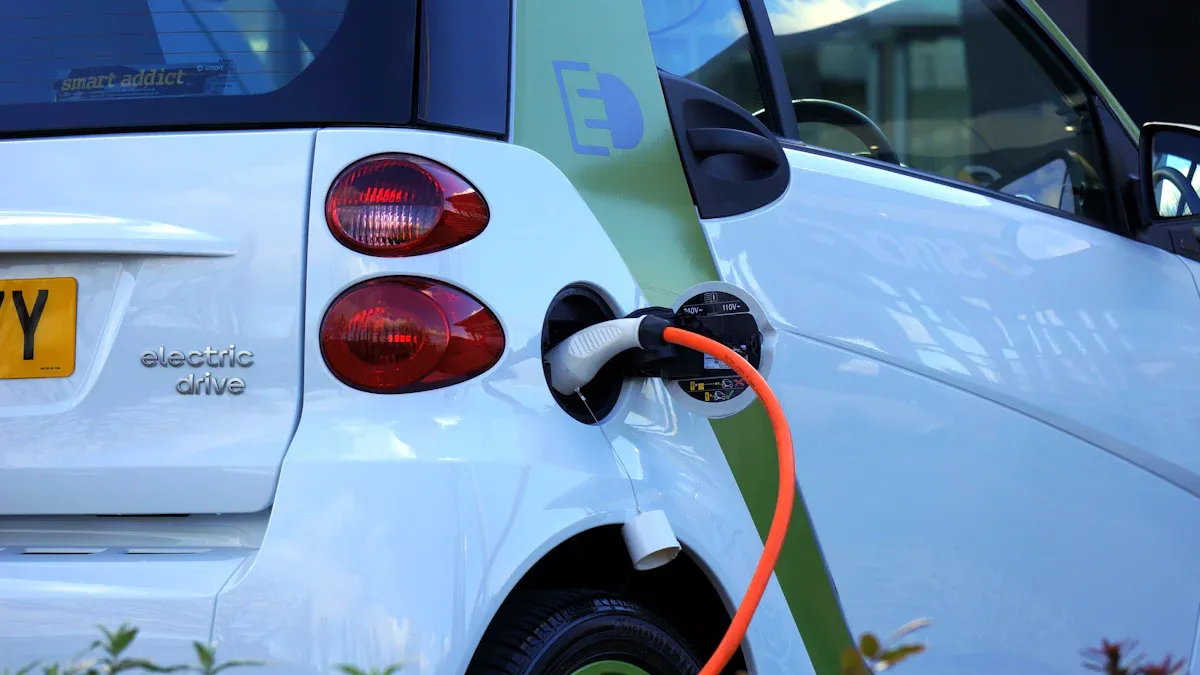
There are four main types of electric vehicles in 2025. Each type is different in how far it can go, how much pollution it makes, and how you fill it up. You can also look at how much it costs to own and use. The table below shows these differences in a simple way:
Vehicle Type |
Range (miles) |
Emissions |
Cost Considerations |
Charging/Refueling |
|---|---|---|---|---|
BEVs |
Range changes as tech gets better |
No tailpipe emissions |
Cheaper to run because of fewer parts and cheap electricity |
Plug in at home or at a public station |
HEVs |
Short electric range, uses gasoline for longer trips |
Less pollution than regular cars |
Lower fuel costs, but still needs gas |
Uses braking to charge, no plug needed |
PHEVs |
20-50 miles on electric, then uses gas |
Less pollution when using electric |
Save money on gas if you use electric more |
Plug in and use gas |
FCEVs |
Long range, like regular cars |
No pollution, just water vapor |
Fast to fill up, but stations are rare |
Fill up at a hydrogen station |
BEVs and FCEVs do not make pollution when you drive. PHEVs and HEVs make less pollution but still use gas. BEVs cost less to fix because they have fewer parts. HEVs and PHEVs can cost more to fix because they have both an engine and a motor. FCEVs cost more and need special hydrogen stations.
Studies show BEVs have the smallest carbon footprint. Plug-in hybrids are next. Hybrids have the biggest carbon footprint of these types. Fuel cell cars can be very clean, but it depends on how the hydrogen is made.
You should think about how much the car costs over time. BEVs cost more to buy, but you save on gas and fixing it. HEVs are often cheapest overall, but you still pay for gas. PHEVs and FCEVs can cost about the same, but both may cost more to fix.
How you fill up or charge your car is important. BEVs need to be plugged in at home or at a public station. PHEVs let you use both electricity and gas, so you have more choices. HEVs do not need to be plugged in at all. FCEVs need hydrogen stations, but these are hard to find.
How far you can go on one fill-up or charge matters. BEVs are getting better and can go farther each year. PHEVs can go a short way on electric, then use gas. HEVs use electric for short trips and gas for long ones. FCEVs can go as far as gas cars, but you need a hydrogen station.
You want to pick the best electric vehicle for your life. Think about how you drive, where you can charge, and if you want to help the planet. Here are some tips to help you choose:
BEVs are good if you live in a city and drive short trips. You can charge at home or at a public station. You get no pollution and spend less on fixing your car.
PHEVs are good if you live far from the city or take long trips. You can use electric for short trips and gas for long ones.
HEVs are good if you want to save gas but do not want to plug in. You get better gas mileage and less pollution than a regular car.
FCEVs are good if you want new tech and live near hydrogen stations. You can fill up fast and go far.
Note: Where you can charge or fill up your car is important. Cities have more charging stations now, but country areas have fewer. Hydrogen stations are still hard to find in most places.
Think about how much the car costs. BEVs cost more at first, but you save money later. PHEVs and HEVs may cost less to buy, but you still pay for gas and fixing them. FCEVs can be expensive and need special fuel.
The government can help you save money. In 2025, you can get tax credits for buying electric cars. Some states want more zero-emission cars, so you see more choices at car lots.
More people are picking electric cars every year. BEVs are growing fast and will soon be almost half of new cars. HEVs are also getting more popular. There are more charging stations and more ways to charge at home every year.
Many people think electric cars cost more, but you often save money over time. You also help the earth by driving cleaner cars.
To pick the best electric car, ask yourself these questions: 1. How far do you drive each day? 2. Can you charge at home or at work? 3. Can you use a public charging or hydrogen station? 4. Do you want no pollution, or is using less gas enough? 5. How much do you want to spend on gas and fixing your car?
You can find an electric car that fits your life. The right car helps you save money, cut pollution, and enjoy new technology.
You can pick from four main electric vehicle types: BEVs, PHEVs, HEVs, and FCEVs. Each one has its own good points for how far it goes, how much pollution it makes, and how much it costs. The table below shows how much carbon each type makes:
Vehicle Type |
Carbon Footprint |
Lifecycle Assessment |
|---|---|---|
BEVs |
Lowest |
Comprehensive |
PHEVs |
Moderate |
Comprehensive |
HEVs |
Higher |
Comprehensive |
FCEVs |
Limited Market |
Potential Future |
Think about how you drive, where you can charge, and how much you want to help the earth. You can use websites like PlugStar and EV Live to learn more. When you shop for a car, check out certified dealerships and compare different models.
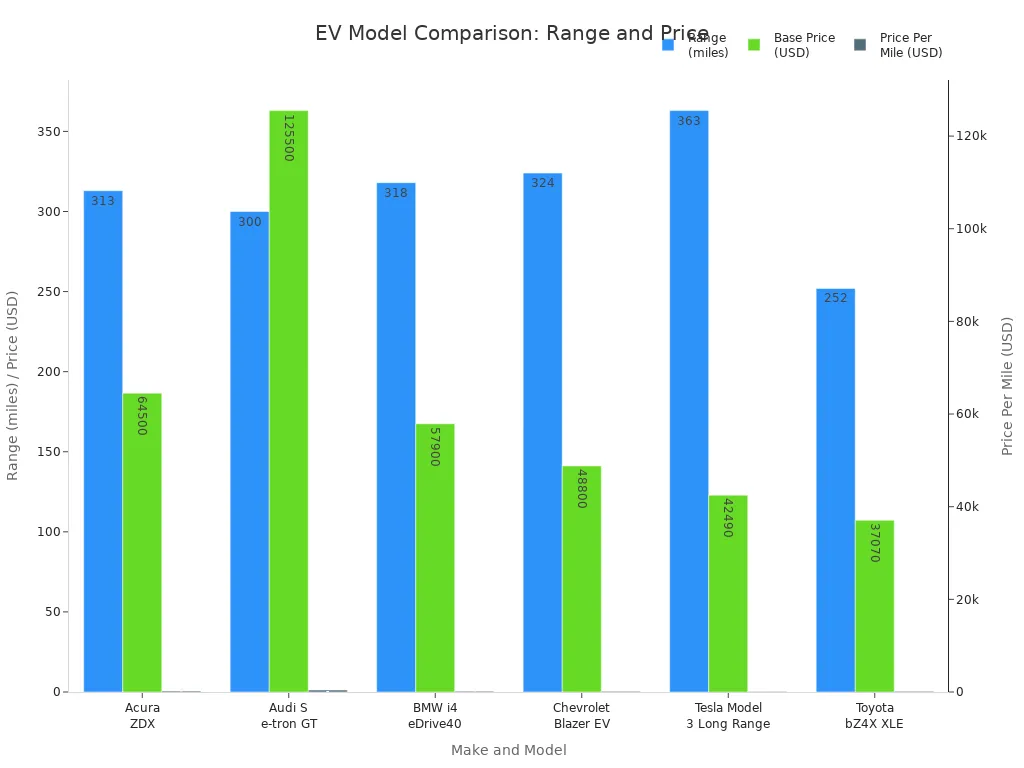
Here are some things you can do next:
Recommendation |
Description |
|---|---|
Buy from approved dealerships |
Go to certified dealerships so you do not have problems and stay safe. |
Consider tariffs |
Know that tariffs can change how much electric vehicles cost. |
Explore used EV market |
Check out used electric vehicles because they can be cheaper. |
Tip: Try using online tools and websites to compare cars and get advice from experts before you buy.
You drive a BEV using only electricity. You charge it with a plug. A PHEV lets you use both electricity and gasoline. You can drive short trips on electric power, then switch to gas for longer trips.
Charging time depends on your car and charger. Fast chargers can fill most BEVs in under an hour. Home chargers usually take several hours. You can check your car’s manual for exact times.
Yes, you can drive an EV in cold weather. Cold temperatures may lower your driving range. You may need to charge more often. Many EVs have features to help batteries work better in winter.
You can find more charging stations every year, especially in cities. Some rural areas have fewer stations. You can use apps or maps to find charging spots near you.
You often save money with an EV. You spend less on fuel and maintenance. BEVs have fewer moving parts, so repairs cost less. You may also get tax credits or rebates when you buy an EV.


