
Views: 0 Author: Site Editor Publish Time: 2025-12-10 Origin: Site


You might wonder how long it takes to charge an EV vehicle. The answer depends on the charging method and your car's battery size. Check out the table below for typical charging times:
Charger Type | Charging Time (to 80%) |
|---|---|
Level 1 | 40-50+ hours (BEV), 5-6 hours (PHEV) |
Level 2 | 4-10 hours (BEV), 1-2 hours (PHEV) |
DC Fast Charging | 20 minutes to 1 hour (BEV) |
Charging time can change based on how full your battery is and the power of the charger. You can find tips on how to charge an EV vehicle faster and get the most range in less time.
Charging time for electric vehicles depends on the method. Level 1 charging takes 40 to 50 hours. Level 2 charging takes 4 to 10 hours. DC Fast Charging takes 20 minutes to 1 hour.
Level 1 charging works best overnight at home. Level 2 charging is faster and good for daily use.
DC Fast Charging is the fastest choice. It adds a lot of range quickly. This is great for road trips.
Keep your battery between 20% and 80%. This helps charging stay fast and keeps your battery healthy.
Plan your charging times based on how much you drive each day. This makes sure your EV is ready when you need it.
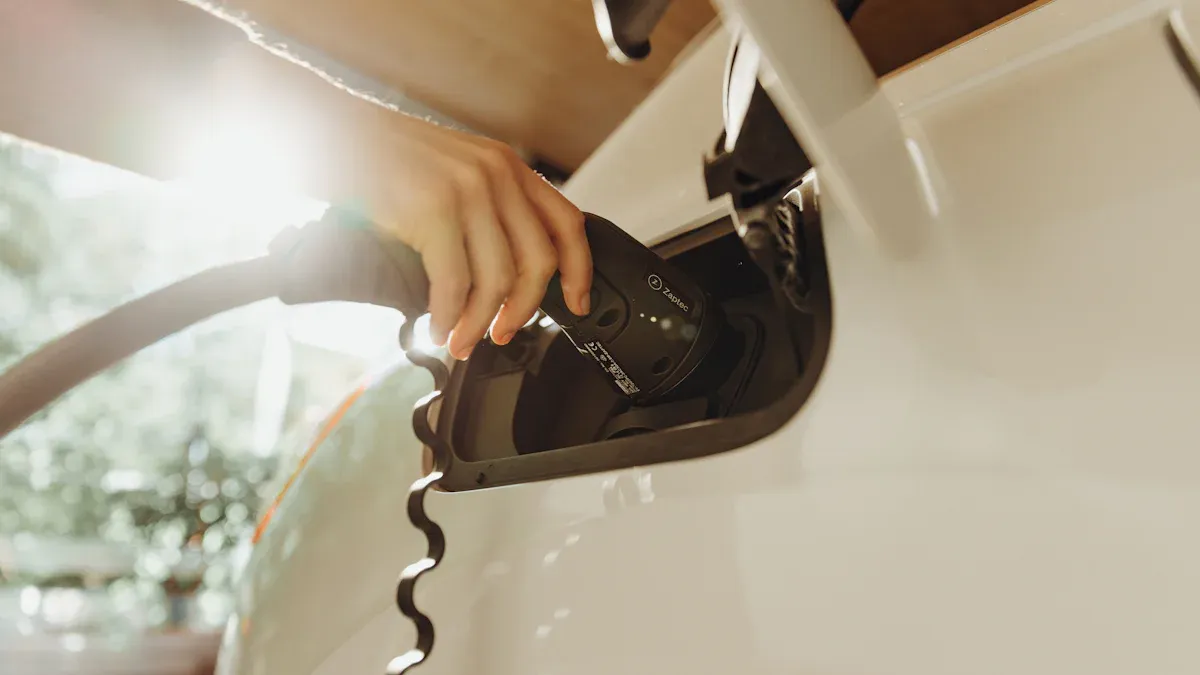
Charging your electric vehicle can feel simple once you know the steps and differences between each method. You can choose from Level 1, Level 2, or DC Fast Charging stations. Each option offers a unique charging time and experience.
Level 1 charging uses a standard household outlet. You plug the cable into your car and start the session, often with a mobile app. This method works best for overnight charging at home. You add about 3.5 to 6.5 miles of driving range per hour. If you drive a battery electric vehicle, the empty-to-full charging time can reach 40 to 50 hours. Plug-in hybrid vehicles charge much faster, usually in 5 to 6 hours because their batteries are smaller.
Tip: Level 1 charging is slow, but it works well if you only drive short distances each day.
Safety Precautions for Level 1 Charging:
Inspect the outlet and cable for damage before you charge an EV vehicle.
Choose a well-lit area if you charge outside.
Stay nearby while your car charges.
Level 2 charging uses a 240-volt outlet, similar to what powers a clothes dryer. You connect the cable, start the session, and your car charges much faster than with Level 1. Most electric vehicles add 30 or more miles of range per hour with a 40-amp level 2 charger. Some cars can add 50 or more miles per hour with an 80-amp charger. You can expect a charging time of 4 to 10 hours for a full battery electric vehicle. Plug-in hybrids usually finish in 1 to 2 hours.
Steps to Charge an EV Vehicle with Level 2:
Plug the charging cable into your car.
Use the app or charging station screen to start charging.
Monitor your car’s status until you reach your desired charge.
Note: Installing a level 2 charger at home may cost $400 to $1,200 for installation and $500 to $700 for the charger itself. You may need to upgrade your electrical panel, which can add $1,300 to $3,000. Always ask a licensed electrician to check your home’s electrical capacity before you install a charger.
Safety Precautions for Level 2 Charging:
Use official charging networks for public stations.
Allow 5 to 6 feet between charging stations to reduce fire risks.
Schedule regular maintenance for your charging equipment.
DC Fast Charging is the quickest way to charge an EV vehicle. You find these stations at public locations, not at home. DC fast chargers deliver high power, usually between 15 kW and 350 kW, and use voltages from 200 to 1000 V. Your car’s battery management system controls the charging process to keep it safe.
You can add a large amount of range in a short time. Most battery electric vehicles reach 80% charge in about 30 to 60 minutes. Paid DC fast charging sessions average 42 minutes, while free sessions can take up to 78 minutes. Plug-in hybrid vehicles rarely use DC fast charging because their batteries are smaller and not compatible.
How to Charge an Electric Car with DC Fast Charging:
Plug the cable into your car.
Start the session using the app or station screen.
Watch your car’s charging status and unplug when finished.
Tip: Plan ahead and identify DC fast charger locations along your route. Stay nearby during charging to protect your vehicle and personal information.
Quick Comparison Table
Charging Method | Time to Full (BEV) | Time to Full (PHEV) | Range Added per Hour |
|---|---|---|---|
Level 1 | 40-50+ hours | 5-6 hours | 3.5-6.5 miles |
Level 2 | 4-10 hours | 1-2 hours | 30-50+ miles |
DC Fast Charging | 30-60 minutes | Not compatible | 100+ miles |
You can charge an EV vehicle at home or on the road. Level 1 works for slow, overnight charging. Level 2 offers a faster solution, especially if you install a charger at home. DC fast charging is best for quick stops during long trips. Plug-in hybrids charge faster because their batteries are smaller, but most cannot use DC fast charging.
You will notice that battery size plays a big role in electric vehicle charging. Larger batteries hold more energy, so they take longer to fill up. If your car has a big battery, you will spend more time at the charger compared to someone with a smaller battery. The amount of charge left in your battery also matters. Charging from empty takes longer than topping up from half full. Most cars charge fastest when the battery is between 20% and 60%. As the battery gets close to full, charging speed slows down to protect the battery.
State of Charge (SOC) | Charging Speed |
|---|---|
Low (20% - 60%) | Fastest charging speed |
Near full (80% - 100%) | Slower charging speed |
Tip: Try to keep your battery between 20% and 80% for the best balance of speed and battery health.
The power of the charger affects how quickly you can charge. Fast-charge stations can deliver between 24 kW and 350 kW. Higher power means faster charging, but your car also sets limits. Each electric vehicle has a maximum charging rate it can accept. Even if you plug into a powerful charger, your car will only take as much as it can handle. For example, some cars can add 100 miles in less than 10 minutes, while others need more time.
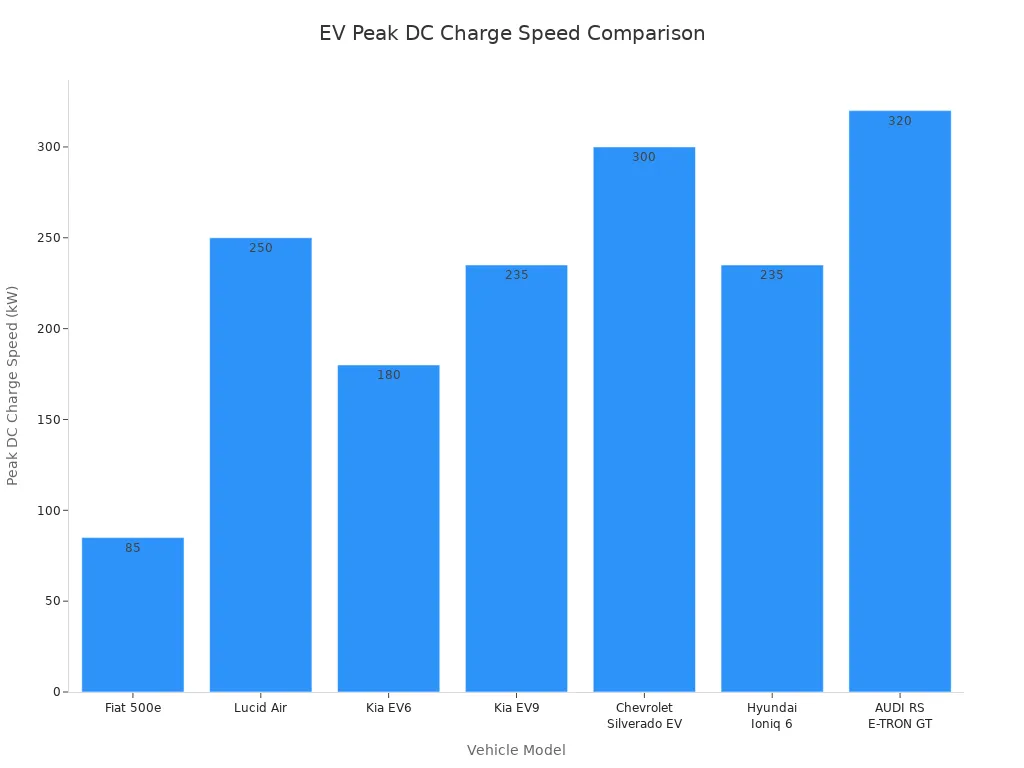
Note: Charging speeds are not always steady. They often start fast and slow down as the battery fills up.
Temperature can change the ev charging process. Cold weather slows down charging speed because the battery needs to warm up. Hot weather can also reduce charging speed, as the car protects the battery from overheating. You can help by parking in the shade on hot days or using covered parking in winter. Preconditioning your battery before charging can improve charging speeds in extreme temperatures.
Park in the shade or a garage when possible.
Warm up your car before charging in cold weather.
Keep your battery above 20% for better performance.
Electric vehicle charging depends on many factors. You can get the best results by understanding how battery size, charge level, charger power, and temperature work together.
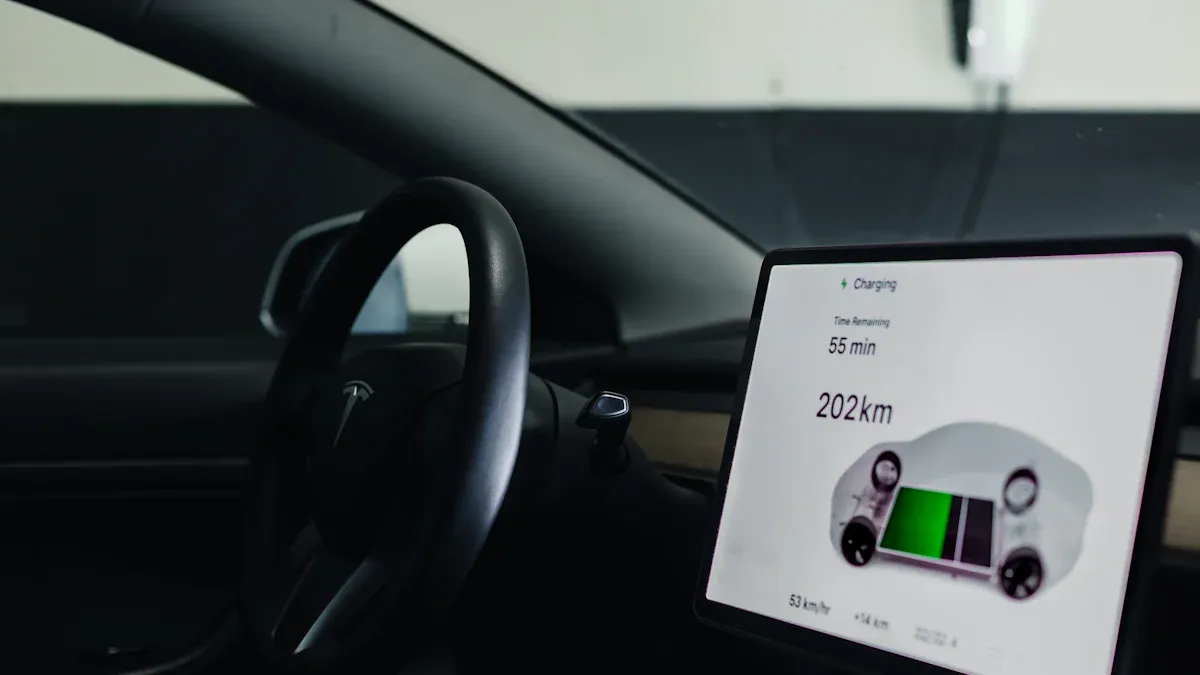
When you charge an electric car, the range you gain each hour depends on the charging method you use. Knowing how much range you get per hour helps you plan your trips and daily routines. Let’s look at what you can expect from each type of charger.
Level 1 charging uses a standard wall outlet. You might use this method with a home charger if you drive short distances. Most drivers add between 3 and 7 miles of range for every hour of charging. This slow speed works best if you leave your car plugged in overnight or for long periods.
Charging Level | Estimated Range Per Hour |
|---|---|
Level 1 | 3 – 7 miles |
You can see that Level 1 charging is not ideal for quick top-ups. If you rely on a home charger for Level 1, you should plan your charging session to last several hours.
Level 2 charging gives you much more range per hour. Many home charger setups use Level 2, and you also find these at public stations. Most Level 2 chargers add between 12 and 60 miles of range per hour, depending on your car and the charger’s power. Some high-powered home charger units can provide up to 70 miles per hour.
Level 2 chargers with lower power (3.7–7.6 kW) add 10 to 25 miles per hour.
Chargers with higher power (11–22 kW) add 25 to 60 or more miles per hour.
If you use a home charger with Level 2, you can finish a charging session overnight or even during a long afternoon.
DC Fast Charging gives you the most range in the shortest time. You find these chargers at public stations, not at home. A typical charging session with a 50 kW charger can add about 250 miles of range in one hour. Some ultra-fast chargers (up to 350 kW) can add over 1,000 miles per hour, but your car must support these speeds.
Charging Power (kW) | Range Gained (miles/hour) |
|---|---|
50 | 250 |
350 | 1000+ |
You can use DC Fast Charging for road trips or when you need a quick boost. Plan your charging session at these stations for the fastest results.
Tip: Use a home charger for daily needs and save DC Fast Charging for longer trips or emergencies.
Top-up charging means you add small amounts of energy to your electric vehicle battery whenever you have the chance. You do not wait until your battery is empty. Instead, you plug in at home, work, or public stations to keep your battery level healthy. This routine helps you avoid long charging sessions and keeps your car ready for daily trips.
You can use different charging methods for top-ups. Level 1 charging is slow but very convenient, especially for charging at home overnight. Level 2 charging gives you a good balance between speed and battery health. You can use it at home or at public stations. DC fast charging works best for quick top-ups during long trips, but you should use it less often to protect your battery.
Level 1 charging offers the most convenience and supports battery health.
Level 2 charging balances speed and battery care, making it ideal for daily use.
DC fast charging is helpful for quick boosts but should be reserved for special situations.
Fast charging can make your battery warmer, but modern cars have systems to handle this heat.
Try to keep your battery between 20% and 80% for the best results.
Tip: Use Level 2 chargers for daily charging at home and save DC fast charging for road trips.
Your daily driving distance affects how often you need to charge your electric vehicle. Most private car owners drive about 18.6 miles (about 30 kilometers) each day. This means you may only need to charge every other day if you use top-up charging. If you drive more, like taxis or buses, you will need to charge more often.
Vehicle Type | Median Daily Distance (km) | Median Charging Events per Day |
|---|---|---|
Private Cars | 30 | 0.47 |
Official Cars | 150 | 0.81 |
SPVs | 150 | 1.14 |
Taxis | 150 | 1.67 |
Buses | 150 | 1.67 |

You can make your charging routine easier by following a few best practices:
Choose slow or moderate charging speeds to reduce battery stress.
Avoid letting your battery get too low or too full.
Adjust your charging habits based on the weather.
Use a mix of charging options to fit your schedule.
Plan for future needs and check for government programs that support charging at home.
Charging at home gives you the most control over your routine. You can plug in overnight and wake up to a full battery. This habit saves you time and helps your battery last longer.
Charging your EV can take more or less time. It depends on how you charge, your battery size, and the weather. Fast charging can give you up to 300 km in 15 minutes. You should plan your charging times for the best results. You can make charging easier and faster by using these tips:
Use mobile apps to find DC fast chargers near you.
Try to keep your battery between 20% and 80%.
Warm up your battery before charging if it is very hot or cold.
Charge when electricity costs less to save money.
Factor | What to Watch For |
|---|---|
Temperature | Cold or hot weather slows charging |
State of Charge | Charging is fastest at lower battery % |
Charging Power | Higher power means faster charging |
Pick the charging method that works for your daily routine. If you use smart habits, your EV will be ready for every trip. ⚡
You will notice that the charging curve shows how your EV car charges faster at first and then slows down as the battery fills. The charging curve helps you understand why charging from 20% to 80% is much quicker than charging from 80% to 100%.
The charging curve explains this. Your car’s battery management system reduces power to protect the battery as it gets close to full. You see the charging curve flatten, which means charging speed drops to keep your battery healthy.
Yes, you can unplug at any time. The charging curve means you get most of your range quickly, especially up to 80%. Many drivers unplug early to save time and keep their battery in good shape.
Temperature changes the charging curve. Cold or hot weather can slow charging, especially at the start. Your car may warm or cool the battery to help the charging curve stay smooth and safe.
You should plan to charge your EV when the charging curve is steepest, usually between 20% and 80%. This gives you the fastest charging and helps your battery last longer. Watch the charging curve on your car’s display for the best results.


