
Views: 0 Author: Site Editor Publish Time: 2026-07-09 Origin: Site


Transitioning from Internal Combustion (IC) engines to electric fleets represents a massive shift in modern logistics. Facilities everywhere face mounting pressure today. They must upgrade material handling equipment to remain competitive. Global sustainability mandates push operations toward greener solutions. However, the decision involves much more than environmental optics. Selecting the right machinery dictates your warehouse layout efficiency. It ensures strict indoor air quality compliance. It also controls long-term maintenance overhead. Making a poor equipment choice can disrupt daily workflows severely. It can inflate your operational expenses drastically over a five-year period. Fleet managers need a reliable way to weigh upfront investments against lifetime performance. We created this comprehensive guide for you. It provides an objective, evidence-based framework for evaluating electric fleets. You will discover how modern battery technology handles heavy-duty tasks today. We cover crucial infrastructure requirements in detail. You will understand grid capacity, charging stations, and safety protocols thoroughly. Ultimately, you will learn exactly how to align equipment specifications with your unique operational demands.
Warehouse managers often hesitate due to initial sticker shock. Upfront investments for electric machines generally exceed their diesel or propane counterparts. However, the return on investment usually materializes quickly. You can often see full returns within 12 to 24 months. This timeline depends heavily on your daily shift frequency and utilization rates. Facilities running multiple shifts achieve payback much faster.
The real economic advantage lives inside maintenance reductions. Internal combustion engines require constant, intensive upkeep. You completely eliminate the need for engine oil changes. You stop buying transmission fluid entirely. You no longer replace spark plugs or repair complex cooling systems. Radiators, belts, and hoses simply do not exist on these newer models.
Electric motors feature significantly fewer moving parts. Fewer parts mean fleet mechanics spend less time on routine services. This simplicity directly translates to reduced downtime. It lowers your labor overhead dramatically. Your machines stay on the warehouse floor moving product instead of sitting in the repair shop.
Energy arbitrage also plays a massive role in ongoing savings. You can compare fluctuating propane and diesel fuel markets against industrial electricity. Fossil fuels suffer from global market volatility. Electricity rates remain relatively stable and predictable. This allows for highly accurate energy budget forecasting. Utilizing an electric forklift for Warehouse operations stabilizes these monthly expenses predictably.
Zero tailpipe emissions fundamentally solve indoor air quality compliance. Facilities handling food-grade items require pristine air conditions. Pharmaceutical storage and tightly sealed fulfillment centers face strict regulations. Airborne contaminants can spoil inventory rapidly. Eliminating tailpipe exhaust removes carbon monoxide risks entirely. You protect your workers from harmful particulate matter immediately.
You no longer need heavy-duty, expensive ventilation systems. Those legacy exhaust fans consume massive amounts of facility power. They pull climate-controlled air out of your building. This forces your HVAC system to work twice as hard. Going electric stops this wasteful cycle.
Beyond air quality, you gain the distinct "quiet fleet" advantage. Lower decibel levels do more than improve ergonomic comfort for drivers. They drastically enhance warehouse safety for everyone. Traditional engines often operate around 90 decibels. Electric motors operate closer to 70 decibels. Operators can easily hear environmental cues. They hear warning alarms, radio communications, and pedestrian footsteps clearly. Reduced noise fatigue also keeps operators focused during long shifts.
Another massive benefit involves maneuverability in narrow aisles. An electric model features a highly compact chassis design. It lacks a bulky engine block and large fuel tank. The heavy battery acts as a built-in, centralized counterweight. This clever engineering allows for incredibly tight turn radii. You can optimize racking density effectively. Narrowing your aisles by just twelve inches across a large facility yields thousands of new pallet positions.
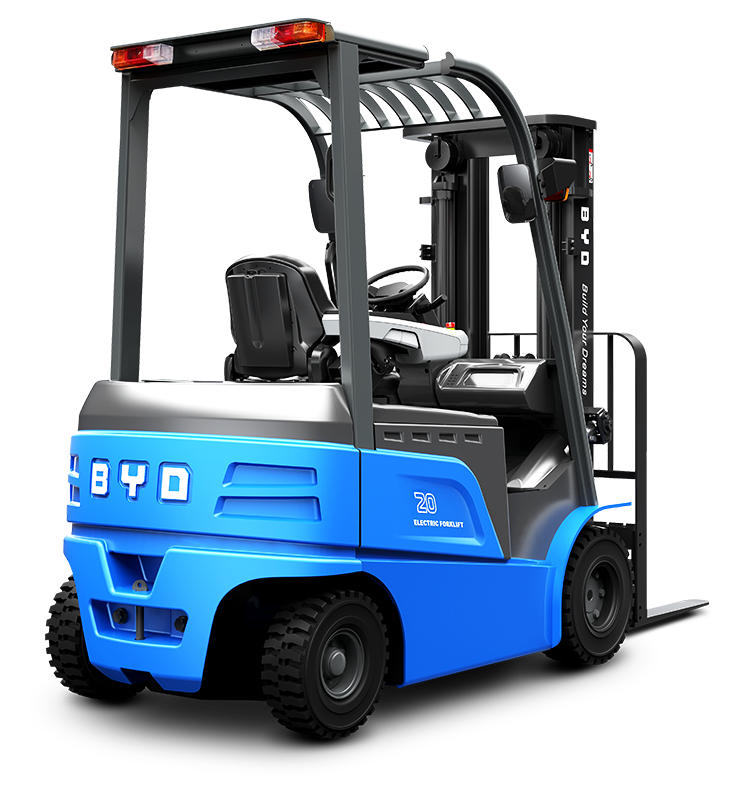
Legacy fleet managers often express skepticism about electric power delivery. Many still believe these machines only handle light loads. They recall older battery models failing mid-shift. Modern AC drive motors have completely shattered this outdated myth. They deliver instant torque right from a standstill. This torque matches and often exceeds internal combustion counterparts.
The technology handles steep inclines effortlessly. It moves massive payload weights without hesitation. High-voltage electrical systems now dominate heavy manufacturing. Lumber yards and high-capacity staging areas deploy them successfully. They provide sustained power output across continuous shifts. Power does not fade as the battery drains. An electric forklift for Warehouse environments absolutely tackles demanding, heavy-lift workflows today.
We must carefully evaluate the sub-decision between battery chemistries. Lead-acid and Lithium-ion represent two very different operational paths. They dictate how your facility manages daily workflows. Lead-acid demands strict discipline. Operators must water them weekly. They require long cooling periods. Lithium-ion changes the paradigm completely. It features an integrated battery management system. This system monitors cell health constantly.
| Feature | Lead-Acid Technology | Lithium-Ion (Li-ion) Technology |
|---|---|---|
| Upfront Investment | Generally lower initial purchase cost. | Higher upfront capital requirement. |
| Charging Cycle | Requires 8 hours charging, 8 hours cooling. | Supports rapid opportunity charging anytime. |
| Maintenance | Requires weekly watering and equalization. | Virtually zero maintenance required. |
| Facility Needs | Dedicated, ventilated battery charging room. | Can charge directly adjacent to work areas. |
Successful deployment requires rigorous upfront facility planning. Grid capacity stands out as the most critical hurdle. You must conduct a thorough electrical audit before buying anything. Determine if your building possesses necessary three-phase power. Check the available amperage. Ensure it supports a multi-unit charging array without tripping breakers. Older buildings often require costly electrical panel upgrades.
Space allocation presents another major reality. Charging stations require dedicated facility footprints. If you choose traditional lead-acid batteries, requirements increase significantly. You need specialized extraction equipment like gantry cranes to swap heavy batteries. You also must build properly ventilated rooms to exhaust hydrogen gas safely. Lithium-ion eliminates this need, allowing wall-mounted chargers near break rooms.
Operator training demands careful attention. Drivers accustomed to internal combustion engines face an adjustment period. They must adapt to a very different acceleration curve. Electric machines deliver power instantly. Regenerative braking also feels noticeably different. Letting off the accelerator slows the machine down quickly. It feeds energy back into the battery automatically. Drivers must learn to use this feature smoothly.
We must also transparently address cold storage degradation. Extreme cold temperatures limit battery performance. Cold environments drain power much faster. A battery operating in a freezer may lose thirty percent of its runtime. You must implement specific workarounds. Utilizing thermal battery heaters helps immensely. Specialized conditioning protocols maintain optimal output in freezing environments.
Finding the optimal machine requires defining clear success criteria first. You need to know exactly what makes the purchase successful. This might mean eliminating mid-shift battery swaps entirely. Perhaps success looks like reducing aisle widths by 12 inches. It could mean cutting your overall maintenance downtime by 30 percent. Once you set these benchmarks, you evaluate specific dimensions.
| Goal Category | Measurement Metric | Expected Electric Fleet Impact |
|---|---|---|
| Facility Layout | Aisle width reduction (inches) | Shrinks required aisles by up to 12-18 inches. |
| Maintenance | Downtime reduction (%) | Cuts routine maintenance intervals by 30-40%. |
| Safety Compliance | Ambient noise reduction (dB) | Lowers operational volume to roughly 70dB. |
You must align equipment specifications with daily operational realities. Consider load capacity and lift height carefully. Match specifications precisely to your heaviest pallets. Ensure the mast height clears your highest racking tier safely. Account for the specific mast design. Triplex masts offer excellent visibility and high reach.
Evaluate your shift structure thoroughly. Single-shift operations might thrive on cost-effective lead-acid setups. A 24/7 continuous operation practically mandates lithium-ion chemistry. The ability to opportunity charge keeps the fleet moving continuously.
Tire type also influences performance drastically. Select cushion tires for smooth, indoor concrete floors. They provide a compact turning radius. Choose pneumatic tires if your operators transition between indoor floors and rough outdoor yards. Pneumatic tires absorb shocks from uneven terrain easily.
We highly advise buyers to request an on-site facility audit. Bring in demo units from manufacturers. Testing them in your actual environment prevents costly missteps. Finding the ideal electric forklift for Warehouse tasks depends on this hands-on validation. It proves the equipment handles your specific gradients, aisle widths, and load types perfectly.
Deploying an electric fleet is no longer just a green initiative. It represents a mathematically sound, strategic business decision. It improves workplace safety, reduces ambient noise, and streamlines daily operations. Success hinges on accurate operational modeling and facility readiness. You must ensure your electrical infrastructure handles the new power demand effectively.
Here are your action-oriented next steps:
A: Battery lifespan depends entirely on cycle counts and usage. Traditional lead-acid batteries typically deliver around 1,500 charge cycles. Modern Lithium-ion (Li-ion) batteries routinely exceed 3,000 cycles. For most operations, this translates to a functional lifespan of five to ten years. Proper maintenance maximizes this longevity.
A: Yes. While designed primarily for indoor use, specific models perform well outdoors. You must equip them with pneumatic tires and weather-sealed internal components. They handle standard shipping yards easily. However, operators should avoid deep mud and heavy, continuous rain to protect electrical systems.
A: Opportunity charging is the practice of plugging in lithium-ion batteries during short intervals. Operators typically connect chargers during 15 to 30-minute lunch or shift breaks. It maintains steady uptime throughout the day. This keeps the fleet moving continuously without damaging battery lifespan.
A: They are exceptionally safe and highly recommended for these environments. They produce zero tailpipe emissions. They also pose no risk of combustible fuel leaks. This makes them the definitive industry standard for maintaining strict hygiene compliance in tightly regulated food-grade facilities.


