
Views: 0 Author: Site Editor Publish Time: 2026-06-28 Origin: Site


By 2026, the material handling sector has reached a definitive tipping point. Stricter global emissions regulations and rapidly maturing lithium-ion technologies change everything. Adopting a small new energy forklift is no longer just a future-looking initiative. It represents a strict baseline requirement for maintaining competitive daily operations. Procurement managers face a vastly shifting landscape. You cannot simply compare lift capacities or mast heights anymore. You must now evaluate complex electrical infrastructure, battery chemistry lifecycles, and integrated telematics. Navigating these overlapping systems often feels overwhelming without a clear standard. We provide a hype-free, criteria-driven evaluation framework to guide you. You will discover how to match the right compact equipment to your facility. We cover specific operational tempos, critical safety requirements, and performance targets. This guide ensures your next equipment upgrade delivers genuine operational efficiency and long-term reliability.
Traditional lead-acid and internal combustion models face rapid industry phase-outs. Regulatory bodies enforce increasingly strict indoor air quality standards. Warehouse managers demand significant noise reduction to improve operator focus. These combined pressures make legacy equipment practically obsolete for indoor use. Older technologies simply cannot meet modern sustainability mandates.
In the compact equipment category, "new energy" carries a very specific meaning today. It primarily refers to advanced lithium-ion systems. Specifically, lithium iron phosphate (LFP) chemistry leads this market segment. LFP offers superior thermal stability compared to older lithium formulations. Emerging hydrogen fuel cell compacts also play a growing role in continuous-use environments. These innovations eliminate the severe limitations of legacy power sources.
Upgrading to a small new energy forklift drives tangible operational outcomes. Facilities can eliminate hazardous battery watering rooms entirely. You immediately recover valuable warehouse floor space for revenue-generating storage. Continuous multi-shift availability becomes the standard rather than a rare exception. Equipment runs cleaner, quieter, and operates with drastically less downtime. Operations managers see measurable improvements in daily pallet throughput. Removing acid spill risks also fundamentally improves workplace safety compliance.
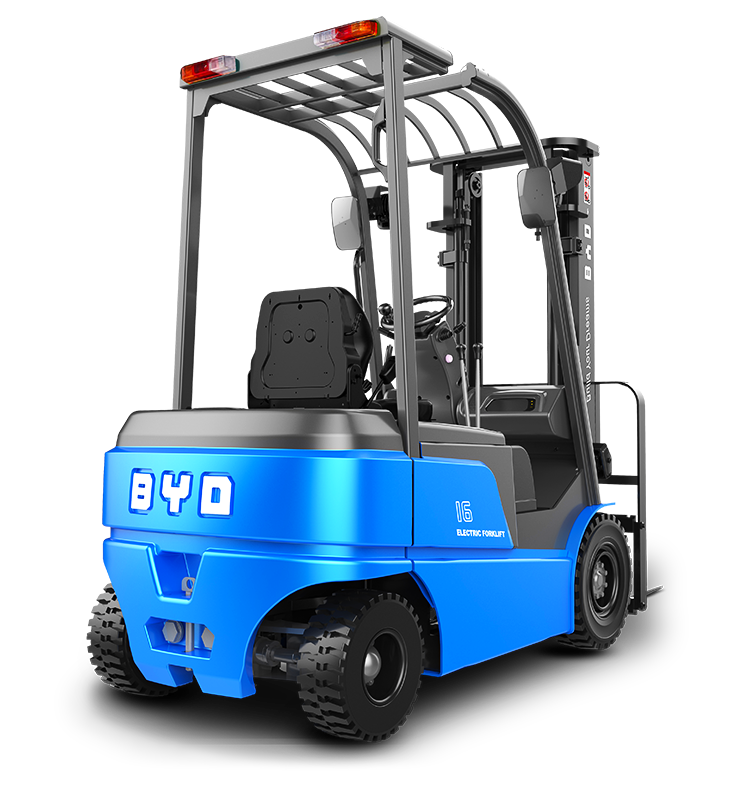
Choosing the correct equipment requires evaluating four critical technical dimensions. You must look beyond basic spec sheets to ensure true operational alignment.
How do you measure right-sizing for your specific facility? You must balance narrow aisle maneuverability against your maximum payload limits. Measure your tightest intersection, not just the straight aisle width. Right Angle Stack (RAS) measurements dictate true operational space requirements. A smaller chassis improves navigation significantly in confined spaces. However, a lighter frame inherently limits maximum lift capacity at height. You must calculate the heaviest load your team handles daily. Match this maximum load to the equipment's rated capacity at your highest rack level.
Evaluate opportunity charging capabilities rigorously during your selection process. Can operators charge the unit during a brief 30-minute lunch break? Modern LFP batteries handle short, frequent charges exceptionally well. Doing so does not degrade the overall battery life cycle. This capability eliminates the need for dedicated spare battery storage. Evaluate your shift schedules to map out available charging windows. You want machines plugging in whenever operators take scheduled breaks. This habit keeps equipment running continuously across two or even three shifts.
Assess the underlying software layer carefully. Look for open-API telematics platforms. They should integrate seamlessly into your existing Warehouse Management Systems. Track shock events, daily utilization rates, and preventative maintenance triggers automatically. Hard data prevents arguments about equipment abuse. Sensor logs reveal exactly when and how impacts occur. Modern systems lock out unauthorized users via RFID badges or PIN codes. This digital access control ensures only certified staff operate the machinery.
Workplace safety goes far beyond traditional seatbelts and flashing lights today. Modern electric drives feature automated speed reduction during tight cornering. This prevents dangerous lateral tip-overs. Pedestrian detection sensors prevent collisions in blind spots. Machine vision cameras recognize human movement and slow the vehicle automatically. Anti-rollback systems stabilize the machine securely on steep loading ramps. Evaluate these active safety features as mandatory requirements, not optional upgrades.
Different material handling applications require distinct machine profiles. The right choice depends heavily on your daily operational realities. We categorize these solutions into three primary form factors.
These units deliver maximum maneuverability in exceptionally tight indoor aisles. They shine in crowded retail backrooms and dense storage layouts. Their tight turning radius allows easy navigation around pallets and pillars. The dual-drive front motors allow the machine to pivot precisely. However, they face a notable structural tradeoff. They offer lower stability on uneven surfaces or steep inclines. Best practices dictate keeping 3-wheel units strictly on smooth, indoor concrete floors.
Choose these models for demanding indoor and outdoor hybrid applications. They handle loading docks and expansion joints effortlessly. When stability remains paramount, four wheels provide a highly secure footprint. They easily manage slightly heavier payloads across rougher terrain. Pneumatic tire options allow them to navigate gravel or uneven asphalt. They require wider aisles than their 3-wheel counterparts. Yet, their versatility makes them ideal for shipping and receiving yards.
Consider these ultra-compact alternatives for specific spatial constraints. Some operations require lifting capabilities but lack the necessary aisle width. A sit-down or stand-up counterbalance machine might simply be too large. Stackers offer excellent lifting power within a minimal spatial footprint. Walkie stackers protect operators by keeping them off the vehicle entirely. They suit mezzanine levels where floor weight limits restrict heavier equipment. Use them for lower-volume stacking tasks and short transport runs.
| Equipment Type | Ideal Application Environment | Primary Advantage | Key Limitation |
|---|---|---|---|
| 3-Wheel Compact Electrics | Indoor smooth concrete, tight retail backrooms | Exceptional turning radius, high maneuverability | Lower stability on rough surfaces or steep ramps |
| 4-Wheel Compact Electrics | Indoor/outdoor hybrid, loading docks, rough yards | Maximum stability, handles heavier payloads | Requires wider aisles, larger overall chassis footprint |
| Electric Pallet Stackers | Mezzanines, extremely narrow aisles, low-volume lifting | Ultra-compact footprint, low floor weight impact | Slower travel speeds, limited maximum lift heights |
Adopting new technology always introduces specific transition challenges. Recognizing these risks early ensures a much smoother deployment process. Ignoring them often leads to severe operational bottlenecks.
Many facilities buy a modern fleet only to face a harsh reality. They realize their building lacks adequate high-voltage infrastructure. You cannot support simultaneous fast charging without sufficient incoming amperage. Plugging multiple fast chargers into a standard grid trips breakers immediately. Upgrading a facility's power grid requires significant time and extensive planning. Consult a licensed commercial electrician before signing any equipment purchase orders. They will measure your current draw and determine required transformer upgrades.
You must prioritize retraining your staff completely. Electric models deliver instant torque immediately upon acceleration. This differs sharply from the gradual buildup of internal combustion engines. Operators must adjust quickly to new acceleration and braking dynamics. Many modern units utilize regenerative braking systems. The machine slows down noticeably the moment an operator lifts their foot. Failing to adapt to this pedal feel can lead to accidental product damage. Dedicate at least two full shifts to unladen practice runs.
Extreme environmental conditions impact battery performance significantly. Acknowledge the physical limitations of certain chemistries in cold storage. Freezer applications drain standard batteries much faster than ambient warehouse tasks. Moving equipment repeatedly between freezers and warm docks causes heavy condensation. You must spec internal battery heaters or thermal management systems to compensate. These additions keep battery cores at optimal operating temperatures. Specify IP65-rated sealed components if your machines operate in heavy rain or washdown areas.
Never purchase fleet equipment without testing it in your actual facility. A structured pilot program validates vendor claims against your daily operational reality.
The most advanced compact equipment only delivers value when matched properly to its environment. The best compact machine in 2026 is not the one holding the most features. It is the one seamlessly aligning with your facility's physical footprint and electrical capacity. Focus strictly on operational realities rather than theoretical specifications.
A: Modern lithium iron phosphate batteries typically last between five to ten years in standard operations. This lifespan translates to roughly 3,000 to 5,000 full charging cycles. Unlike older technologies, opportunity charging does not cause memory degradation. You can plug them in frequently during short breaks. This maintains high performance throughout the battery's entire lifecycle.
A: Basic 110V or 220V outlets might support single units with very low daily usage. However, commercial multi-shift operations usually require robust three-phase power setups. Dedicated fast-charging stations demand significant electrical amperage. You should consult a commercial electrician to evaluate your current grid capacity. Upgrades are often necessary to support simultaneous fast charging for an entire fleet.
A: Yes. Traditional electric models were mostly limited to smooth indoor concrete floors. Modern IP-rated new energy machines are fully capable of handling diverse outdoor environments. You can spec them with pneumatic tires for better traction on rough asphalt or gravel. They easily manage demanding loading docks, wet conditions, and active outdoor yard work.
A: Numerous local and federal sustainability grants exist to offset initial equipment investments. You should investigate programs like the EPA's clean air initiatives. Many state-level agencies offer substantial carbon reduction grants for replacing combustion engines. Utility companies sometimes provide incentives for installing high-efficiency commercial charging infrastructure. Always check current local databases before finalizing your procurement plans.


