
Views: 0 Author: Site Editor Publish Time: 2026-08-05 Origin: Site


Transitioning to an Oil-electric hybrid fundamentally changes your vehicle maintenance economics. While you burn less fuel, the internal combustion engine still requires precise lubrication to function correctly. Applying legacy maintenance habits often leads to trouble. Over-servicing based on old 3,000-mile rules wastes your hard-earned capital. Under-servicing because you assume the electric motor does all the work invites catastrophic engine failure. Moisture and cold starts quietly attack the engine from the inside out.
This guide provides a strict compliance-aware framework for your vehicle. You will discover exactly when to schedule your hybrid oil change based on dual metrics. We cover the specific oil formulations required to protect intermittent engines from sludge. Finally, you will learn how to evaluate service providers to ensure proper, warranty-compliant maintenance moving forward.
Standard vehicles run continuously once you start the ignition. The engine builds heat and sustains it throughout the journey. Conversely, an Oil-electric hybrid constantly toggles between the battery pack and the gas engine. The computer dictates energy flow for maximum efficiency. It shuts the engine down at stoplights, coasting speeds, or while descending hills. This saves gas but severely interrupts the normal thermal cycle of the combustion process.
Because the gas engine frequently shuts off at idle, it rarely reaches optimal operating temperatures. Traditional engines rely on sustained heat to expand internal parts to their proper clearances. Hybrid engines often run cold for miles. This persistent thermal deficit fundamentally changes how lubricants behave under pressure inside the crankcase.
Engines running cold struggle to evaporate internal condensation. They also trap unburned fuel inside the cylinders. Over time, these foreign fluids mix directly into the crankcase. Moisture and raw gasoline contaminate the engine oil rapidly. This degrades overall viscosity and ruins protective properties, even if you drive very few miles each week.
Best Practices for Engine Health:
Traditional mechanics emphasize miles driven as the ultimate maintenance gauge. This metric tells only half the story for modern hybrids. Time dictates oil degradation just as much as distance. Chemical additives break down slowly over months, regardless of your odometer readings. Moisture accumulation occurs even while the car sits parked.
Industry standards provide a safe baseline for normal drivers. Toyota, Ford, and Honda generally recommend oil services every 7,500 to 10,000 miles. However, they strictly attach a 12-month limit under normal conditions. You must honor whichever milestone arrives first. Ignoring the calendar invites severe sludge accumulation over the long term.
Certain driving habits force you into the "severe duty" category. This designation cuts the recommended interval down to 5,000 miles or 6 months. Severe conditions include:
Many drivers trust algorithmic oil-life monitors blindly. These dashboard computers track engine revolutions, idling hours, and ambient temperatures. However, algorithms sometimes miscalculate fuel dilution rates in extremely cold climates. Manual dipstick checks remain essential redundancies for vehicle owners. Calendar tracking prevents you from accidentally skipping crucial time-based thresholds.
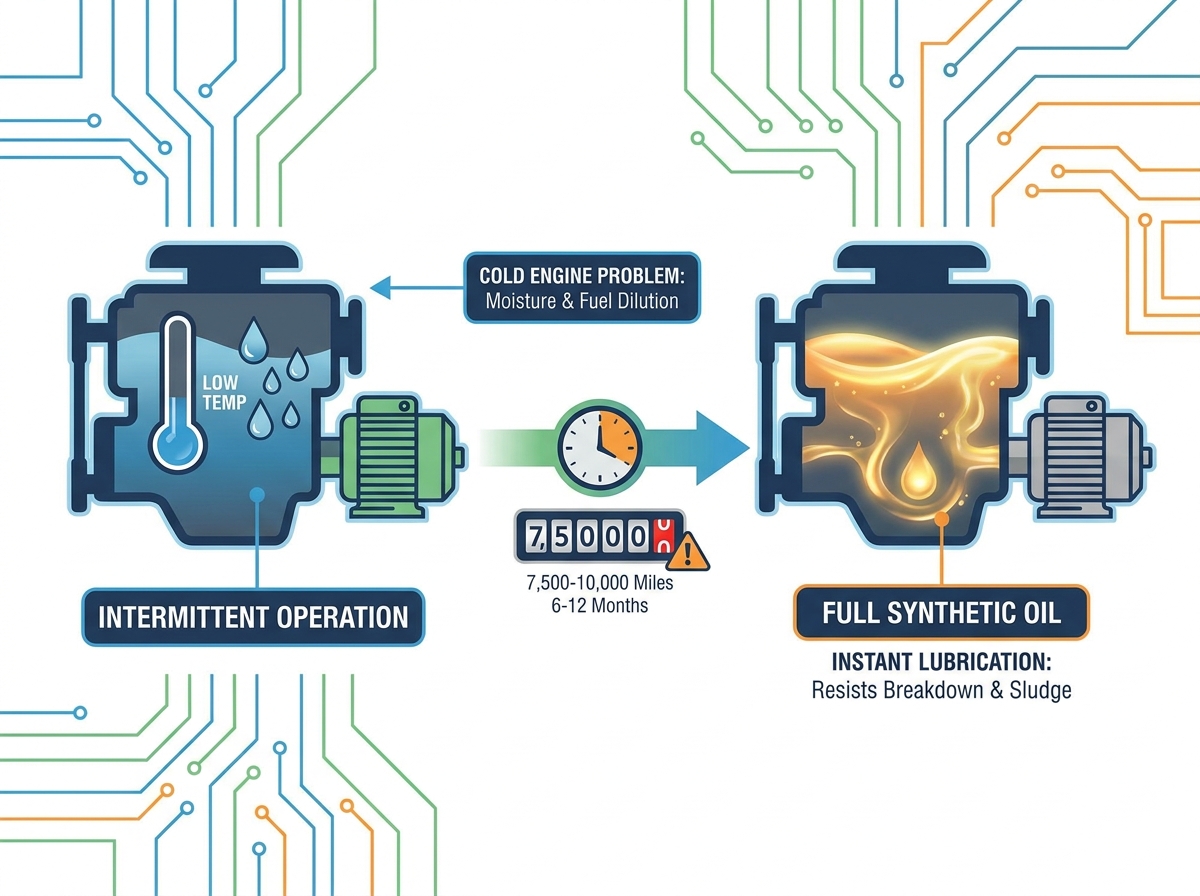
Modern hybrids demand ultra-low viscosity oils to function properly. You will typically see 0W-20 or 0W-16 stamped clearly on the filler cap. Lower viscosity ensures immediate oil flow to dry mechanical parts. When the gas engine suddenly engages at highway speeds, it requires instant lubrication to survive the shock.
Conventional oil fails completely in hybrid applications. It thickens too much in cold temperatures to flow quickly. Synthetic formulations resist thermal breakdown significantly better than older mineral oils. They expertly manage the unique chemical contaminants caused by endless engine cold-starts.
Raw base oil requires intense chemical enhancement. Manufacturers blend specific synthetic additives to combat sludge buildup. These specialized detergents neutralize harsh acids generated by trapped moisture. Engines experiencing frequent on/off cycling rely heavily on these chemical safeguards to prevent internal corrosion.
Comparison of Engine Lubricants:
| Oil Type | Cold-Start Flow Speed | Moisture Resistance | Suitability for Hybrids |
|---|---|---|---|
| Conventional (5W-30) | Sluggish | Low | Never recommended |
| Synthetic Blend | Moderate | Medium | Emergency stop-gap only |
| Full Synthetic (0W-16 / 0W-20) | Instantaneous | High | Mandatory OEM standard |
Skipping time-based intervals carries severe financial risks. Imagine waiting two full years because you only drove 8,000 miles. Dealerships aggressively track these specific timelines in their databases. Missing the 12-month mark gives them valid grounds to void your OEM powertrain warranty entirely.
Moisture accumulation always leads to thick oil sludge. Sludge blocks narrow oil passages inside the cylinder head. This starvation leads to premature wear on sensitive engine bearings. Piston rings also suffer from poor lubrication, eventually allowing oil to burn during the combustion stroke.
Degraded oil drastically increases internal engine friction. The gas engine must work harder to overcome this physical resistance. This parasitic drag directly degrades the vehicle's overall fuel economy. It also strains the hybrid battery system by demanding more frequent electric assists to maintain momentum.
Common Mistake: Ignoring a faint gasoline smell on the dipstick. This odor indicates severe fuel dilution, meaning the oil has lost its vital film strength.
Visiting a franchise dealer offers unparalleled peace of mind. They guarantee the use of precise OEM-spec oil and proprietary filters. Dealerships also provide automated logging of service records for your VIN. This automated paper trail ensures flawless warranty compliance if major parts fail. Additionally, they often install critical software updates during routine service visits.
Third-party shops can save you money on basic labor. However, you must vet their technical qualifications rigorously. Require tangible proof of hybrid-certified technicians on staff. Look for specific credentials like the ASE L3 Light Duty Hybrid/Electric Vehicle certification before booking an appointment.
Ask specific questions before handing over your keys. This prevents costly misunderstandings on the service drive. You should demand clarity on their exact procedures:
Any reliable shop working on an Oil-electric hybrid should easily answer these technical questions without hesitation. If they seem confused by the hybrid reset procedure, take your vehicle elsewhere immediately.
Maintaining a hybrid vehicle requires a major mental shift. You must abandon purely mileage-based intervals from the past. Instead, adopt a strict dual mileage-and-time framework for all future maintenance. Intermittent engine cycles inherently create moisture and sludge risks. Thus, replacing the synthetic lubricant every 12 months is mandatory for engine survival.
Take action today to protect your automotive investment:
A: No, the frequency remains the same. While PHEVs drive more miles on electric-only power, time-based oil degradation still occurs. The strict 12-month rule applies universally to prevent moisture contamination and acid buildup inside the crankcase.
A: Yes, provided it matches the strict synthetic viscosity requirements. You must stick to ultra-low weights like 0W-20. High-mileage synthetic oil contains beneficial seal conditioners. These additives prevent leaks without compromising the instant cold-start flow required by hybrid engines.
A: This indicates fuel dilution. Cold engine operation prevents unburned fuel from evaporating out of the crankcase. The gasoline mixes into the lubricant, destroying its viscosity. This common hybrid issue makes strict adherence to scheduled oil changes absolutely essential for engine survival.


