
Views: 0 Author: Site Editor Publish Time: 2026-06-27 Origin: Site


Moving from internal combustion engines or traditional lead-acid batteries to modern power sources involves more than just swapping vehicles. It fundamentally transforms your entire warehouse workflow. A small new energy forklift replaces outdated systems using advanced technology. This shift demands entirely new operational strategies from your fleet managers.
This transition solves major productivity bottlenecks in material handling. We define "new energy" primarily as Lithium-ion (Li-ion) and Hydrogen Fuel Cell (HFC) technologies. These advanced powertrains eliminate daily watering routines and hazardous swapping processes entirely. They also dramatically reduce facility emissions and lower ambient noise levels.
In this guide, you will explore the specific engineering mechanics behind these modern machines. We will focus specifically on models falling into the 0.5 to 2.5-ton capacity range. We will translate these technical details into clear operational outcomes. You will also learn how to assess your facility's infrastructure, evaluate lifecycle sustainability, and prepare your fleet for a successful deployment.
Procurement teams must understand exactly what they are acquiring. This technical knowledge directly impacts maintenance schedules and operator training requirements. You cannot effectively manage equipment if you do not fully comprehend its underlying mechanics. We must strip away the marketing jargon and examine the powertrain.
These mechanics rely on extremely high energy-density cells. An onboard Battery Management System (BMS) continuously governs these volatile components. The BMS actively balances individual cell temperatures and strictly regulates charge rates. This prevents thermal runaway and ensures safe daily operation.
Power delivery remains remarkably consistent throughout the shift. A small new energy forklift running on lithium sustains a completely flat voltage curve. Lift and travel speeds do not degrade as the battery depletes. This stable performance solves a notorious productivity issue common among legacy lead-acid units.
HFC mechanics generate electricity on-board rather than storing it. They utilize a Proton Exchange Membrane (PEM) to facilitate an electrochemical reaction. This reaction occurs between stored hydrogen gas and ambient oxygen. The only physical byproduct generated is clean water vapor.
Power delivery functions much like an internal combustion engine vehicle regarding rapid refueling. Operators fill a tank rather than plugging into a grid. Yet, operators still experience the smooth, emission-free electric drive typical of advanced battery platforms.
Electric power routes directly to independent Alternating Current (AC) motors through an inverter. AC motors lack traditional carbon brushes or commutators. This brushless design eliminates a massive source of mechanical friction and ongoing maintenance.
This configuration ensures precision traction and highly accurate load lifting. It proves especially critical when operating within tight, confined spaces. These machines also integrate advanced regenerative braking. This system recaptures kinetic energy during deceleration. It feeds this recovered energy back into the power source, extending usable shift time.
Fleet managers face a constant, stressful balancing act. They need to align equipment uptime with highly demanding facility shift schedules. Operators must completely avoid the risk of mid-shift power failures. Understanding refueling workflows ensures seamless facility operations.
Drivers can plug their units directly into decentralized chargers. They do this during short fifteen-minute breaks or standard lunch periods. This practice keeps the equipment running continuously across multiple active shifts.
The operational reality requires incredibly strict operator discipline. The onboard BMS effectively prevents "memory effect" degradation common in older batteries. However, a consistent failure to plug in disrupts the next scheduled shift. Managers often must enforce new behavioral habits across their entire driving staff.
Operators use a specialized high-pressure dispenser to refill onboard hydrogen tanks. This entire process finishes in under three minutes. It requires minimal physical effort compared to swapping heavy battery blocks.
The reality mirrors legacy internal combustion operational habits perfectly. It supports continuous, round-the-clock facilities operating on intense three-shift schedules. However, this method requires highly specialized, code-compliant on-site storage solutions. You must adhere to strict local ventilation and fire suppression regulations.
| Operational Feature | Lithium-Ion (Opportunity Charging) | Hydrogen Fuel Cell (Rapid Refueling) |
|---|---|---|
| Refueling Time | 1-2 hours for full charge; 15-min top-ups. | Under 3 minutes for a complete fill. |
| Operator Action | Requires plugging into decentralized wall units. | Requires driving to a centralized hydrogen dispenser. |
| Workflow Impact | Requires strict discipline to charge during breaks. | Mimics traditional ICE fueling habits perfectly. |
| Ideal Shift Fit | 1 to 2 shifts, or lighter 3-shift operations. | Relentless 24/7 heavy-duty 3-shift operations. |
Decision-makers must cut through optimistic marketing materials. You need to identify precisely where these machines might underperform. Recognizing potential implementation risks prevents severe operational disruptions. We must evaluate these units through a skeptical, highly practical lens.
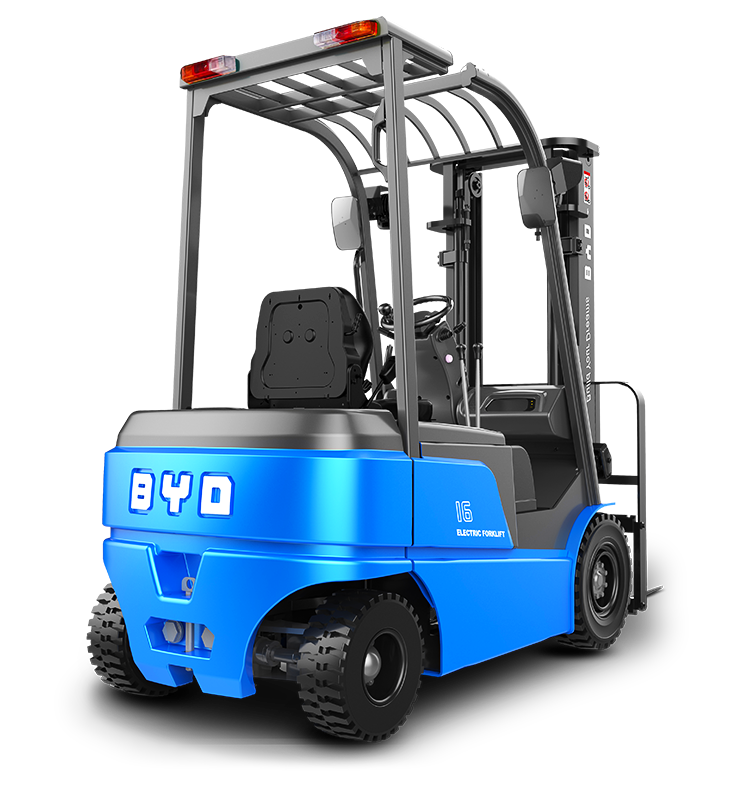
Lithium and hydrogen units weigh significantly less than massive lead-acid batteries. A standard lead-acid battery provides crucial passive counterweight for lifting operations. Consequently, a small new energy forklift chassis requires engineered steel counterweights. Manufacturers build these dense steel plates directly into the lower frame. These necessary additions maintain absolute stability when moving heavy pallets at maximum fork elevation.
Standard lithium batteries often suffer range depletion in sub-zero environments. The internal electrolyte becomes viscous, slowing down necessary chemical reactions. Charging bottlenecks also occur frequently when cold cells refuse high-amp inputs. Operations in freezing temperatures usually require specialized heated battery variations. These onboard heaters draw parasitic load, slightly reducing overall runtime.
Conversely, hydrogen fuel cells maintain thermal consistency naturally. The electrochemical generation process produces internal heat. They excel in cold storage environments without noticeable performance drops. You will not see the sluggish lift speeds typically associated with frozen battery cores.
Installing high-amp fast chargers often exceeds an older building's existing electrical grid capacity. Facilities might require massive utility upgrades before deploying a large fleet. Evaluating grid limits beforehand prevents unexpected deployment delays.
Common Mistakes to Avoid:
Building a strong operational case requires looking far beyond the initial equipment acquisition phase. You must measure long-term efficiency gains and sustainability impacts. Fleet managers should focus on metrics detailing equipment lifespan and facility utilization.
These modern machines eliminate acid watering routines completely. Facilities no longer need to manage fuel deliveries or handle hazardous toxic spills. Warehouses can eliminate dedicated battery swapping rooms entirely.
Removing hoists, eyewash stations, and acid-resistant flooring reclaims valuable square footage. You can convert this newly available floor space into revenue-generating inventory storage. This spatial optimization dramatically improves overall warehouse throughput and operational flow.
Lithium systems typically guarantee over three thousand distinct charge cycles. This equates to roughly seven to ten years of standard use before dropping to eighty percent capacity. Even at reduced capacity, these batteries often find second-life applications in stationary energy storage.
Fuel cell stacks require periodic refurbishment over extended operational timelines. The internal membranes degrade slowly after thousands of hours. However, the underlying chassis offers a virtually infinite operational lifespan. You only replace the power module, not the entire vehicle.
These models help warehouse operations meet strict OSHA compliance standards effortlessly. They deliver significant ambient noise reduction alongside zero local emissions. Transitioning your fleet strongly aligns with corporate sustainability targets and municipal environmental mandates.
Operational Best Practices:
Selecting the right equipment requires a methodical, data-driven approach. Do not rush into a massive fleet conversion blindly. Follow this proven four-step framework to ensure you choose the correct technology for your specific facility needs.
Completing this structured evaluation mitigates deployment risks. It ensures your operational infrastructure fully supports the new technology before a broader rollout.
Procuring a small new energy forklift involves much more than adding a vehicle. It represents a critical infrastructure decision for your entire facility. Operational efficiencies create immediate and lasting workflow improvements. Operators enjoy flat voltage performance and zero daily maintenance requirements.
Facilities simultaneously reclaim valuable floor space previously lost to legacy charging rooms. You achieve a cleaner, quieter, and highly predictable operational environment. The technology works flawlessly when properly matched to your specific duty cycles and facility grid capabilities.
Your next step involves precise technical planning. Download a detailed technical specification sheet for your preferred models today. Schedule a comprehensive facility infrastructure audit with a qualified engineering consultant immediately. Map out your electrical capacity before finalizing any equipment decisions.
A: No. Because there is no acid watering, outgassing, or physical battery swapping required, chargers can be distributed safely throughout the facility near break areas.
A: Most tier-one manufacturers warrant their BMS-regulated lithium batteries for 5-10 years (or around 3,000 to 5,000 cycles) before they degrade to 80% of original capacity.
A: Yes. The only emission is water vapor. However, the on-site hydrogen storage and dispensing infrastructure requires strict adherence to local fire codes and ventilation standards.
A: Yes, provided the unit is specifically rated (e.g., IP65 or higher) for outdoor use. The electric motors and BMS are enclosed, but tire type and ground clearance are the limiting factors for small chassis models.


