
Views: 0 Author: Site Editor Publish Time: 2026-07-07 Origin: Site


Targeting a high-range electric vehicle reveals a clear and specific priority. You want to eliminate range anxiety entirely while driving. Accommodating high-mileage daily commutes or frequent cross-country road trips demands robust battery capacity. However, the heavily advertised "650km" specification remains merely a lab-tested metric. Real-world usability heavily depends on underlying testing standards, sophisticated thermal management, and local charging infrastructure. Assuming a direct one-to-one translation from the manufacturer's brochure to the open highway often leads to unexpected frustration.
This comprehensive guide provides an evidence-based, highly skeptical evaluation framework for prospective buyers. You will learn exactly how to validate marketing specifications against physical realities. We will also explore how to assess charging architectures and prioritize essential hardware. Ultimately, these insights will help you confidently shortlist the perfect 650km New Energy Car for your unique driving habits.
Manufacturers advertise impressive range figures to capture buyer attention. Yet, these numbers rely entirely on specific laboratory testing conditions. You must understand the profound differences between CLTC, WLTP, and EPA testing protocols. The CLTC standard often projects a highly optimistic figure. A vehicle boasting a 650km CLTC rating might only deliver 450 to 500 kilometers during actual highway driving. WLTP offers a slightly more realistic estimation for European and global markets. Meanwhile, the EPA standard provides the strictest, most accurate reflection of real-world driving conditions.
| Testing Standard | Primary Region | Real-World Accuracy | Highway Testing Focus |
|---|---|---|---|
| EPA | North America | High (Closest to reality) | Aggressive, high-speed cycles |
| WLTP | Europe / Global | Moderate | Balanced city and highway |
| CLTC | Asia | Optimistic | Low-speed, urban focus |
Next, consider the widely accepted 80/20 rule of battery health. Daily driving rarely utilizes the full 100% capacity of the pack. To preserve chemical longevity, engineers recommend operating strictly between a 20% and 80% charge level. Consequently, your usable daily capacity shrinks significantly. The practical daily range of a 650km New Energy Car is actually closer to 390 kilometers. Pushing the battery to 100% daily can accelerate physical cell degradation.
Speed heavily influences this available capacity. High-speed highway driving impacts electric vehicles much more severely than internal combustion engines. Air resistance increases exponentially as your velocity climbs. Sleek aerodynamics play a crucial role here. A low drag coefficient (Cd) helps the vehicle slice through the air efficiently. Maintaining your travel distance at speeds above 110 km/h requires excellent aerodynamic design rather than just raw battery size. Look for vehicles featuring a drag coefficient below 0.24 to maximize highway efficiency.
Shoppers often fall into the large battery trap. Achieving a massive travel distance usually requires an oversized battery pack. These units often range from 85kWh to well over 100kWh in total capacity. A larger battery inherently adds significant physical weight to the vehicle chassis. This extra mass forces the motors to work harder during acceleration. Without high-speed charging capabilities, long road trips become completely unviable. You will spend hours waiting at public charging stations.
Therefore, an 800V Silicon Carbide (SiC) architecture serves as a non-negotiable feature. Current automotive market standards demand this technology for high-capacity electric vehicles. A traditional 400V platform simply cannot replenish a massive battery quickly enough. Upgrading to an 800V system drastically reduces your wait time.
Thermal management systems are equally critical for consistent battery performance. You must seek out vehicles featuring standard heat pumps and advanced liquid cooling loops. Extreme external temperatures directly affect how quickly a battery accepts incoming current. Buyers should meticulously verify whether the car supports active battery preconditioning. This software feature warms the internal cells to an optimal temperature before you arrive at a fast charger. Proper preconditioning ensures you actually achieve those heavily advertised 18-minute charge times.
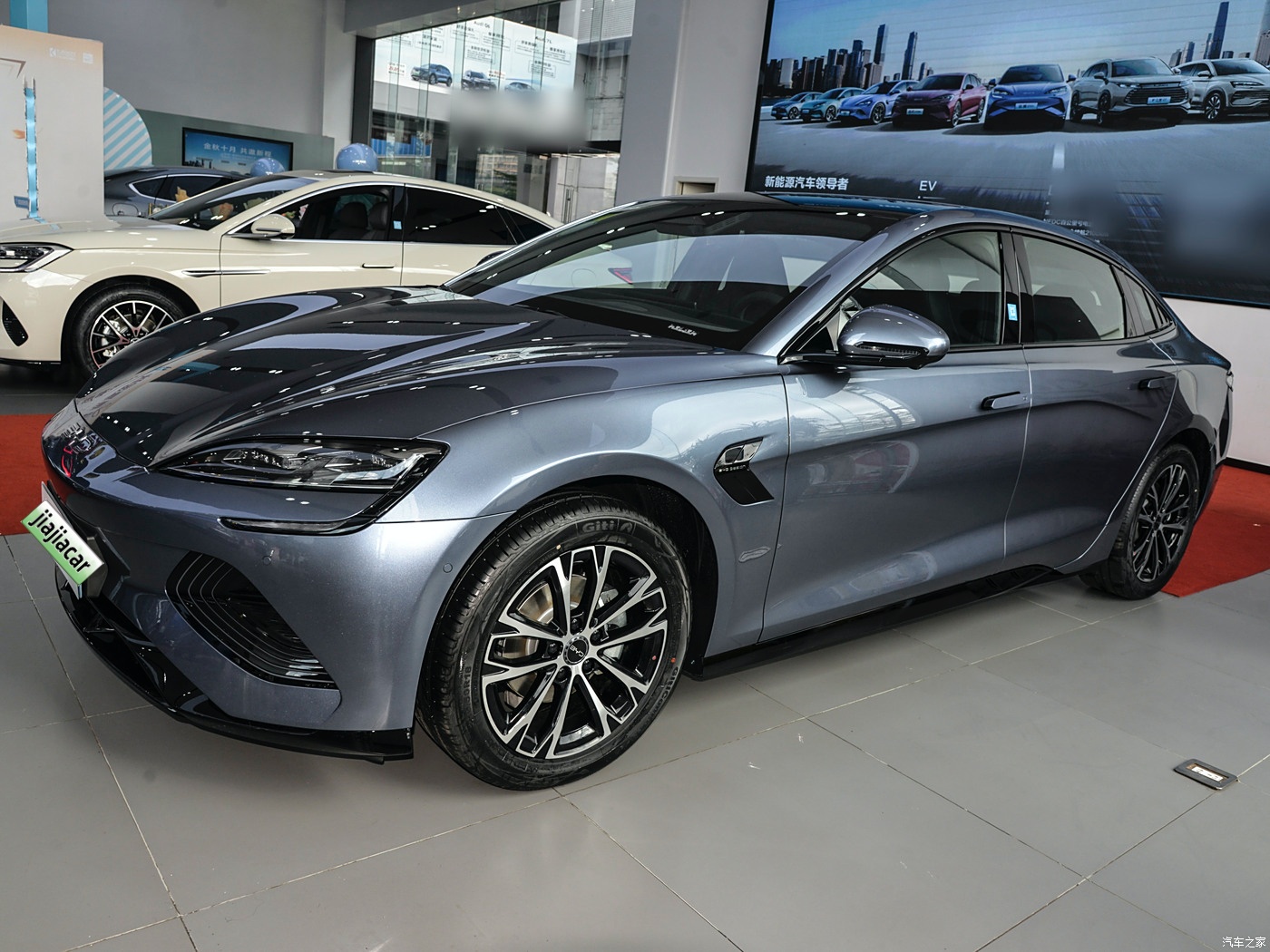
Laboratory testing entirely ignores the harsh realities of physical driving environments. Winter weather introduces severe physical limitations for both lithium-ion and LFP batteries. Freezing temperatures slow down internal chemical reactions significantly. You should expect a 15% to 30% drop in overall efficiency during winter months. A modern heat pump certainly mitigates this degradation. It compresses ambient air to efficiently warm the passenger cabin. However, even the best heat pump cannot eliminate the physical impact of cold weather entirely.
Tire selection also dictates how far you can travel on a single charge. Original equipment manufacturers often offer multiple wheel options for the same model. Choosing 19-inch aerodynamic wheels maximizes your rolling efficiency. Conversely, selecting 21-inch performance alloys increases the physical rolling resistance. This purely aesthetic choice can negatively impact your total travel distance by up to 10%. Furthermore, carrying a heavy passenger payload or mounting an external roof box creates substantial aerodynamic drag. These accessories force the electric motors to draw more continuous power.
Finally, your extended travel capability remains heavily dependent on public infrastructure. A massive battery pack holds absolutely no value if you cannot refill it quickly. Buyers must actively audit their local and frequently traveled regional routes. You can use digital tools or proprietary manufacturer network maps to locate reliable DC fast charging stations. Ensure your intended routes offer adequate, high-speed infrastructure before committing to a specific vehicle model. Relying solely on slow residential chargers for cross-country trips is highly impractical.
Models boasting a massive travel capacity occupy a premium tier in the automotive market. You must critically evaluate whether your actual daily driving needs justify this heavy, high-capacity specification. Challenge your own assumptions before finalizing your decision. Does your frequency of 400km-plus road trips genuinely demand a larger battery buffer? Many drivers rarely exceed 50 kilometers in a single day. If you only take cross-country trips once a year, renting a traditional hybrid vehicle might prove far more practical. Carrying a massive, heavy battery daily for a rare annual trip reduces overall vehicle efficiency.
You must also thoroughly review standard battery degradation expectations. Most modern electric vehicle batteries degrade at a slow rate of 1% to 2% per year. Buyers should carefully examine the manufacturer's official warranty terms. A strong industry standard guarantees at least eight years or 160,000 kilometers of comprehensive coverage. Additionally, ensure the warranty document strictly promises a minimum of 70% capacity retention over this specific period. Anything less exposes you to unnecessary long-term risk.
This long-term battery health directly impacts the vehicle's future desirability. Long-range variants generally hold stronger residual appeal in the secondary automotive market. Buyers seeking pre-owned vehicles highly value the extended battery buffer. A slightly degraded 650km battery still offers substantial daily utility compared to a degraded standard-range pack. It provides future owners peace of mind against inevitable chemical aging.
Common Mistake: Buyers often assume a massive battery automatically translates to a superior driving experience. In reality, carrying unnecessary battery weight hampers acceleration, handling, and braking efficiency.
Shortlisting the right vehicle requires a clear understanding of your primary daily use case. We generally segment prospective buyers into two distinct user categories. High-mileage commuters should prioritize LFP (Lithium Iron Phosphate) battery chemistries. These specific batteries safely tolerate daily 100% charging routines without accelerating cell degradation. Conversely, frequent road trippers should focus heavily on NMC or NCA battery types. These energy-dense chemistries pair excellently with 800V architectures to deliver superior peak charging curves.
Next, rigorously evaluate the vehicle's native software and navigation operating system. The infotainment center must do much more than simply display digital maps. Does it automatically calculate necessary charging stops along your programmed route? A truly smart system will accurately estimate your precise state of charge upon arrival. It should also trigger automatic battery preconditioning as you physically approach the charging station. Poor software implementation makes long-distance travel unnecessarily stressful.
Finally, execute a highly structured, objective test drive. Use this concrete three-step action plan to validate the manufacturer's marketing claims:
Purchasing a premium high-range vehicle involves far more than simply selecting the largest available battery pack. You must critically validate the underlying testing standards to understand true highway capabilities. Confirming the presence of a robust 800V architecture guarantees your charging stops remain brief and highly efficient. Furthermore, advanced thermal management systems ensure consistent performance regardless of freezing external temperatures. These technical foundations transform a good vehicle into a reliable travel companion.
We strongly encourage you to perform a realistic audit of your actual daily mileage. Map out the reliable fast-charging infrastructure along your most common travel routes. Then, schedule back-to-back test drives using our structured checklist. Focus your testing efforts strictly on sustained highway efficiency and software intelligence rather than brief city-street acceleration. Taking these deliberate actions ensures you select a highly capable vehicle perfectly tailored to your lifestyle.
A: Not necessarily. While the battery holds substantial energy, everyday phantom drain uses capacity even when parked. Additionally, following the 80/20 charging rule limits your usable daily capacity to prolong battery health. If your commute is short, weekly charging is possible, but plugging in every few days is optimal.
A: It depends entirely on your charging habits. LFP batteries boast excellent durability and safely handle daily charging to 100%. They are ideal for high-mileage daily commuters. NMC batteries offer higher energy density and superior cold-weather performance. If you take frequent road trips, NMC is generally the better choice.
A: You should expect a realistic reduction of 20% to 30% in freezing temperatures. Cold weather slows battery chemistry and requires significant energy for cabin heating. Vehicles equipped with advanced heat pumps perform better, but physical degradation remains unavoidable. Parking in a climate-controlled garage helps mitigate energy loss.
A: A PHEV serves as an excellent alternative if you frequently travel through remote areas lacking reliable charging infrastructure. They eliminate range anxiety entirely on long trips. However, you must consider the increased maintenance overhead associated with managing both an internal combustion engine and an electric drivetrain.


