
Views: 0 Author: Site Editor Publish Time: 2026-11-23 Origin: Site


Purchasing a new electric forklift is a major capital expenditure. It directly impacts warehouse throughput, safety, and long-term operating efficiency. You need reliable equipment to keep supply chains moving smoothly every single shift. Electric models offer lower emissions and significantly reduced maintenance compared to traditional internal combustion engines.
However, selecting the wrong specification causes serious operational problems. You might face rapid battery degradation, unexpected infrastructure bottlenecks, or inadequate lifting capacity for your heaviest pallets. Buying blindly often leads to costly downtime and frustrated operators.
This guide provides a vendor-neutral framework to evaluate facility constraints and battery technologies. We will help you ensure your next material handling investment aligns perfectly with your operational reality. You will learn exactly how to match equipment specifications to your specific warehouse layout, workload demands, and safety requirements.
You must evaluate your physical workspace before looking at equipment brochures. A forklift is only useful if it can safely navigate your facility. Ignoring spatial constraints leads to damaged racking, injured operators, and inefficient workflows.
Measure your narrowest aisles and intersections carefully. You need to calculate the Right Angle Stack (RAS) requirement. This metric determines the minimum amount of space a forklift needs to turn and insert a pallet into a rack.
Standard counterbalance forklifts typically require aisles between 12 and 13 feet wide. If your aisles measure between 8 and 10 feet, you need a narrow aisle reach truck. For ultra-dense storage with aisles as narrow as 5 to 6 feet, you must invest in very narrow aisle (VNA) configurations. Always measure the distance between the pallets overhanging the racks, not just the distance between the steel uprights.
Your warehouse floor dictates your tire choice. Using the wrong tires causes excessive vibration, rapid tread wear, and unsafe handling.
Forklift Tire Comparison
| Tire Type | Ideal Surface | Key Benefit |
|---|---|---|
| Cushion Tires | Smooth, indoor concrete floors | Smaller turning radius, highly maneuverable |
| Pneumatic Tires (Air-filled) | Rough terrain, outdoor yards | Excellent shock absorption on uneven ground |
| Solid Pneumatic Tires | Debris-filled yards, recycling centers | Puncture-proof durability for harsh environments |
| Polyurethane Tires | Indoor epoxy or sealed concrete | High load capacity, non-marking properties |
Note any temperature extremes in your facility. Cold storage environments require specialized conditioning. Moving a forklift from a -20°F freezer to a warm loading dock causes severe condensation. This moisture easily shorts out standard electrical components. You must specify cold-storage conditioning to protect the control boards and prevent rapid battery drain.
Similarly, evaluate exposure to moisture or dust. High-dust environments require sealed components. Look for the appropriate IP (Ingress Protection) rating. An IP65 rating ensures the truck can withstand dust ingress and low-pressure water jets.
Document your operating hours per day. Single-shift operations have very different equipment tolerances compared to demanding 24/7 continuous-use cycles. A light-duty truck might perform perfectly for four hours a day. However, that same truck will overheat and fail if pushed through three consecutive shifts. Match the truck's duty cycle rating to your actual operational intensity.
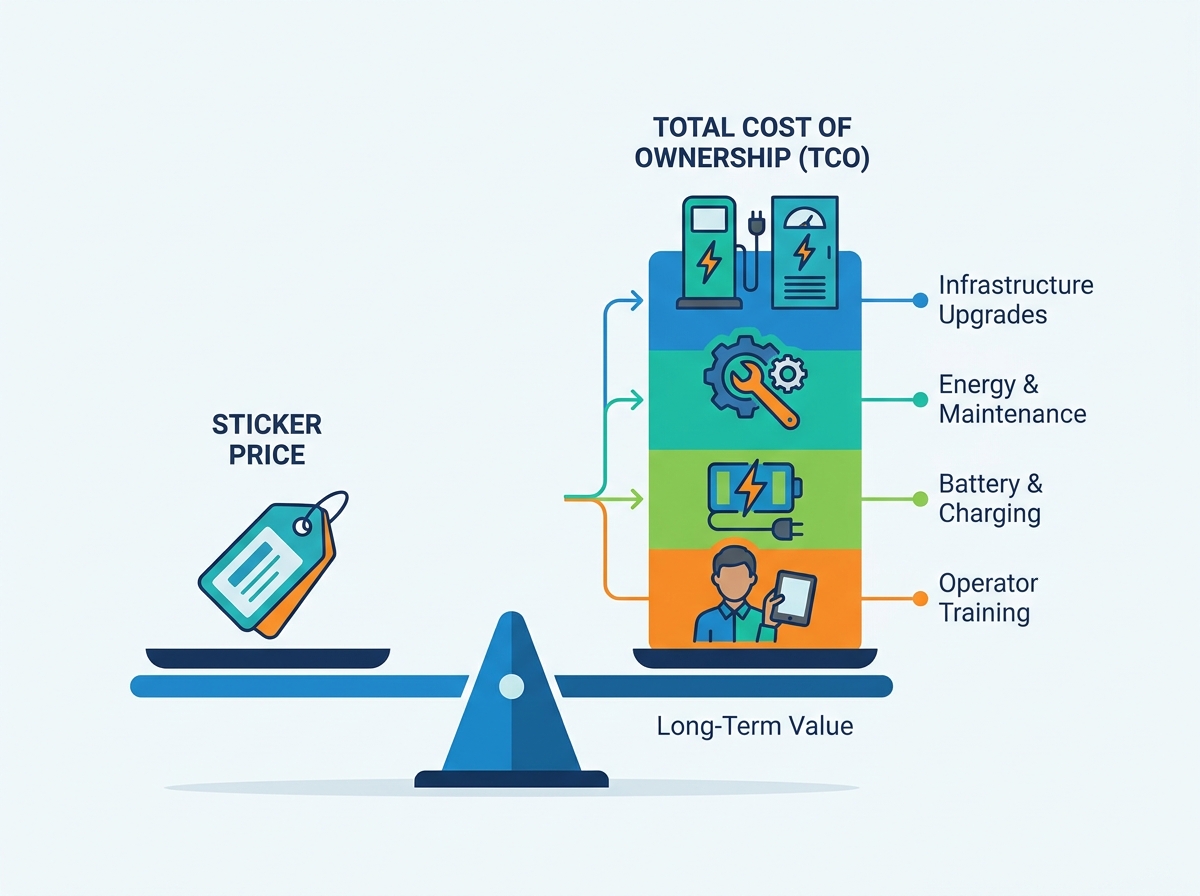
The battery chemistry you choose dictates how your entire warehouse operates. It affects shift scheduling, facility design, and daily maintenance routines. You must understand the fundamental differences between the two primary technologies.
Lead-acid remains a proven, widely used technology in material handling. It offers a lower initial purchase price, making it attractive for operations with strict capital budgets.
Lithium-ion technology has transformed warehouse operations over the last decade. It eliminates almost all daily maintenance tasks.
Calculate your labor costs carefully. Track how much time your operators spend driving to the battery room, swapping heavy lead-acid batteries, and performing weekly watering. For multi-shift operations, the labor savings from eliminating battery swaps often justify the premium price of lithium-ion. For a light-duty, single-shift warehouse, traditional lead-acid might still make the most financial sense.
Buying a new electric forklift requires precise mathematical alignment with your inventory. Guessing on load capacities or lift heights creates severe safety hazards.
Identify your heaviest typical load. Do not just look at the average pallet weight; you must plan for the maximum extreme. Furthermore, you must understand the concept of "derating."
A forklift rated for 5,000 pounds cannot lift 5,000 pounds in every scenario. You lose lifting capacity when you add attachments like side shifters, carton clamps, or rotators. You also lose capacity when lifting a load to maximum mast heights. Always consult the manufacturer's data plate. OSHA requires this plate to accurately reflect the truck's true capacity with its specific attachments installed.
Follow these steps to determine your required lift height:
Choose the right mast type. A Triplex (three-stage) mast is the most common, offering excellent maximum lift height while maintaining a low collapsed profile. If you load trailers, you need a mast with "free lift," allowing the forks to rise without the mast channels extending upward and hitting the trailer roof.
Electric forklifts typically operate on 36V, 48V, or 80V systems.
A 36V system works well for standard warehouse duties, narrow aisle reach trucks, and moderate travel speeds. A 48V system provides better acceleration and handles heavier attachments efficiently. You need an 80V system for heavy-duty applications, outdoor yard work, and high-intensity continuous cycles. Higher voltage systems run cooler under heavy strain, protecting the internal electrical components from heat damage.
Introducing new electric equipment into a facility involves hidden operational risks. You must proactively manage your electrical infrastructure and operator habits to ensure a smooth transition.
Risk: Buying high-output fast chargers only to discover your building lacks the necessary amperage. Many older warehouses have maxed-out electrical panels. If you install three 480V fast chargers, you might blow the main breaker for the entire facility.
Mitigation: Conduct a comprehensive site power audit before signing any purchase orders. Hire a licensed commercial electrician to evaluate your current panel load. They will tell you exactly how much spare amperage you have available for new charging stations.
Risk: Operators treating electric trucks exactly like internal combustion trucks. They might fail to plug in opportunity chargers during breaks, leading to dead trucks mid-shift. They might also drive aggressively, assuming the electric motors can handle endless abuse.
Mitigation: Implement strict operational protocols. Install telematics systems on the trucks. Telematics track exactly who is driving, monitor impact events, and report charging compliance directly to management. Require operators to complete specific training on electric truck nuances.
Ensure your charging areas comply strictly with OSHA regulations. If you utilize lead-acid batteries, OSHA general industry standards require specific safety equipment. You must install acid spill kits, plumbed eyewash stations, and proper ventilation systems to disperse explosive hydrogen gas. Even with sealed lithium-ion systems, you must maintain clear fire lanes and protect charging cables from forklift traffic.
The relationship you build with your equipment dealer matters just as much as the brand of truck you buy. A great forklift becomes a terrible investment if you cannot get parts or service when it breaks down.
Never buy a forklift based solely on a PDF brochure. You must have the dealer walk your facility. A professional sales representative will verify your aisle dimensions, check your floor conditions, and confirm your power availability. They spot obstacles you might overlook, such as uneven dock plates or low-hanging HVAC ducts.
Insist on a demo period of one to two weeks. You need the exact make, model, and battery type you intend to buy. Have your operators run the truck through a full, demanding shift. Validate the manufacturer's performance claims regarding battery life and lifting speeds. Operator feedback during this trial is invaluable; if the controls are unergonomic, productivity will plummet.
Scrutinize the warranty documents carefully. Manufacturers often break warranties into separate coverages for the chassis, the powertrain, and the battery. Look closely at the battery warranty. Watch out for strict depth-of-discharge clauses or charging cycle limits that could void your coverage. Ensure you understand what constitutes "normal wear and tear."
Assess the dealer's local technician footprint. Ask how many field technicians operate within a 30-mile radius of your warehouse. Review their guaranteed response times. If a truck goes down, you need a technician on-site within four hours, not four days. Ask about their first-time fix rate and local parts inventory. A strong SLA keeps your supply chain moving.
Choosing the right electric material handling equipment is an exercise in matching battery chemistry and chassis specifications to your facility's physical and electrical realities. You cannot force a large counterbalance truck into a narrow aisle, nor can you expect a light-duty battery to survive a brutal 24/7 schedule.
Take the time to measure your aisles, audit your electrical panels, and calculate your exact load requirements. Prioritize strong dealer support and robust service agreements over the lowest initial bid. Equipment that sits broken waiting for parts destroys warehouse productivity.
Take action today by walking your warehouse floor with a tape measure. Encourage your operations team to schedule a professional site survey with a local dealer to begin your evaluation process on solid footing.
A: Battery lifespan depends heavily on the chemistry and maintenance. Traditional lead-acid batteries typically last for about 1,500 charging cycles, provided they receive regular watering and equalization. Advanced lithium-ion batteries generally last for 3,000 or more cycles with zero daily maintenance required. Proper charging habits maximize the lifespan of both types.
A: Yes, you can use them outdoors effectively. However, the truck must be properly equipped. You need pneumatic tires to handle uneven outdoor terrain. The forklift must also feature weather-sealed cabs and electrical components with high IP ratings (like IP65) to protect against rain, dust, and debris.
A: Most industrial chargers require dedicated 3-phase power. The specific amperage depends on the battery size and charger type. Standard chargers pull moderate amperage, while fast chargers require massive electrical upgrades. You must have a commercial electrician verify your facility's panel capacity before installing new charging stations.
A: Prices vary widely based on capacity and specifications. Standard warehouse models generally range from $25,000 to $40,000. Heavy-duty variants or those equipped with high-capacity lithium-ion systems can easily exceed $50,000 to $80,000. Keep in mind that batteries and industrial chargers are often priced separately from the base chassis.


